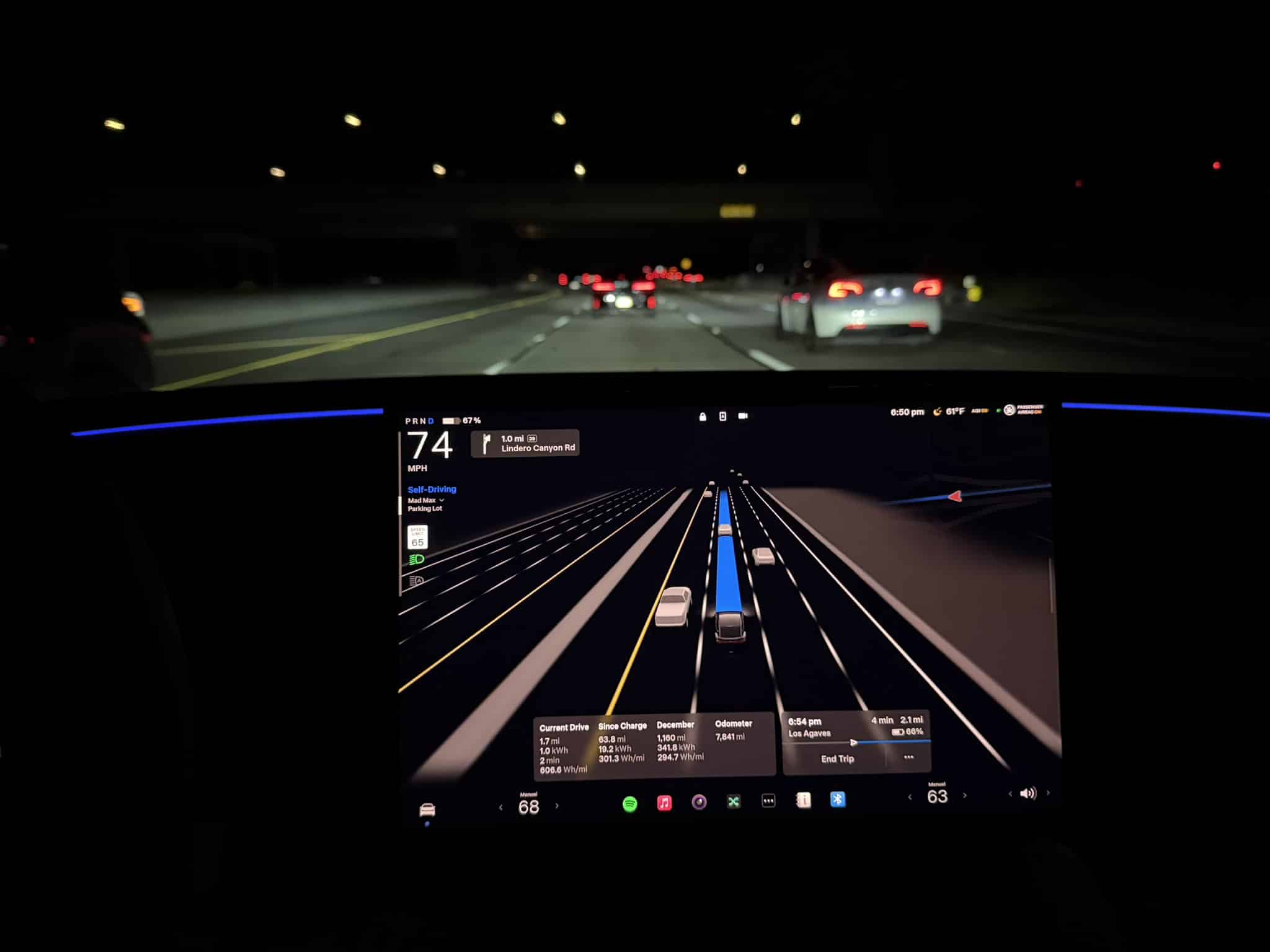
Tesla’s 10-Billion-Mile Marathon: The Journey Towards Full Self-Driving
Key Takeaways
- Elon Musk estimates that 10 billion miles of training data are required for safe unsupervised Full Self-Driving (FSD).
- Paul Beisel emphasizes the data-driven lead Tesla has in autonomy and the challenges rivals face in catching up.
- As of now, Tesla has driven nearly 7 billion miles for FSD, showcasing its lead in training data.
- Musk notes the challenge of achieving autonomy, mentioning that reaching 99% accuracy is easier than tackling the complexities beyond that point.
- Tesla VP Ashok Elluswamy reiterates Musk’s point about the extensive challenges presented by the “long tail” of driving data.
In the ever-evolving realm of autonomous vehicles, Tesla stands at the forefront, breaking new ground with its Full Self-Driving (FSD) technology. At the heart of this technological marvel lies an ambitious target set by Tesla CEO Elon Musk: 10 billion miles of training data. But what does this figure signify for Tesla, its competitors, and the future of autonomous driving?
The Quest for 10 Billion Miles
Elon Musk, a visionary known for pushing boundaries, estimates that achieving truly safe and unsupervised Full Self-Driving capabilities requires an astonishing 10 billion miles of data. This goal underscores the vast complexity inherent in creating an autonomous vehicle that can navigate the labyrinth of real-world challenges without human intervention.
Why 10 Billion Miles?
- The Complexity Curve: As Musk puts it, reality presents a “super long tail of complexity.” Reaching 99% accuracy in autonomous driving might seem achievable, but tackling the remaining 1%—the realm where unpredictable scenarios and rare events occur—is an entirely different beast.
- Regulatory Requirements: Previously, Musk suggested that worldwide regulatory approval for autonomous driving might necessitate around 6 billion miles of evidence. By revising this figure to 10 billion, Musk highlights the formidable hurdles in proving safety and reliability to policymakers globally.
Tesla’s Leading Edge
As of the end of 2025, Tesla boasts nearly 7 billion miles of FSD training data. This monumental achievement not only cements Tesla’s position at the pinnacle of autonomous driving technology but also highlights the formidable challenge faced by its rivals in the industry.
Paul Beisel’s Perspective
Paul Beisel, a notable figure from Apple and Rivian, accentuates Tesla’s dominant lead in autonomy. He points out that catching up with Tesla isn’t merely a matter of matching its technological prowess; it’s about overcoming the massive gap in data and experience. Beisel is skeptical about the notion that competitors can bridge this gap quickly by relying solely on simulations and limited on-road testing.
The Challenge of Perfect Autonomy
Both Elon Musk and Tesla VP for AI Software Ashok Elluswamy emphasize the Herculean effort required beyond the 99% mark.
- The Long Tail Phenomenon: This concept refers to the numerous infrequent and unique circumstances an autonomous vehicle must handle reliably. The “long tail” represents the edge cases that are difficult to predict and encounter with frequency in standard testing or simulations.
- Iterative Improvement: Constant data collection and iteration are key. As Tesla amasses billions of miles of training data, its FSD technology continues to learn and adapt, slowly conquering the complex “long tail.”
The Road Ahead
As Tesla closes in on its 10-billion-mile target, the road ahead remains one of both opportunity and immense challenge. While the company leads in data acquisition and autonomous driving experience, the ultimate success of Full Self-Driving hinges on navigating regulatory landscapes, technological hurdles, and the unpredictable nature of driving itself.
Tesla’s monumental task of achieving 10 billion miles of FSD data is not just a milestone; it’s a testament to the future of transportation. It sets a high bar for safety, innovation, and perseverance. As Tesla pushes the envelope, the entire industry watches closely, poised to follow in its tracks.