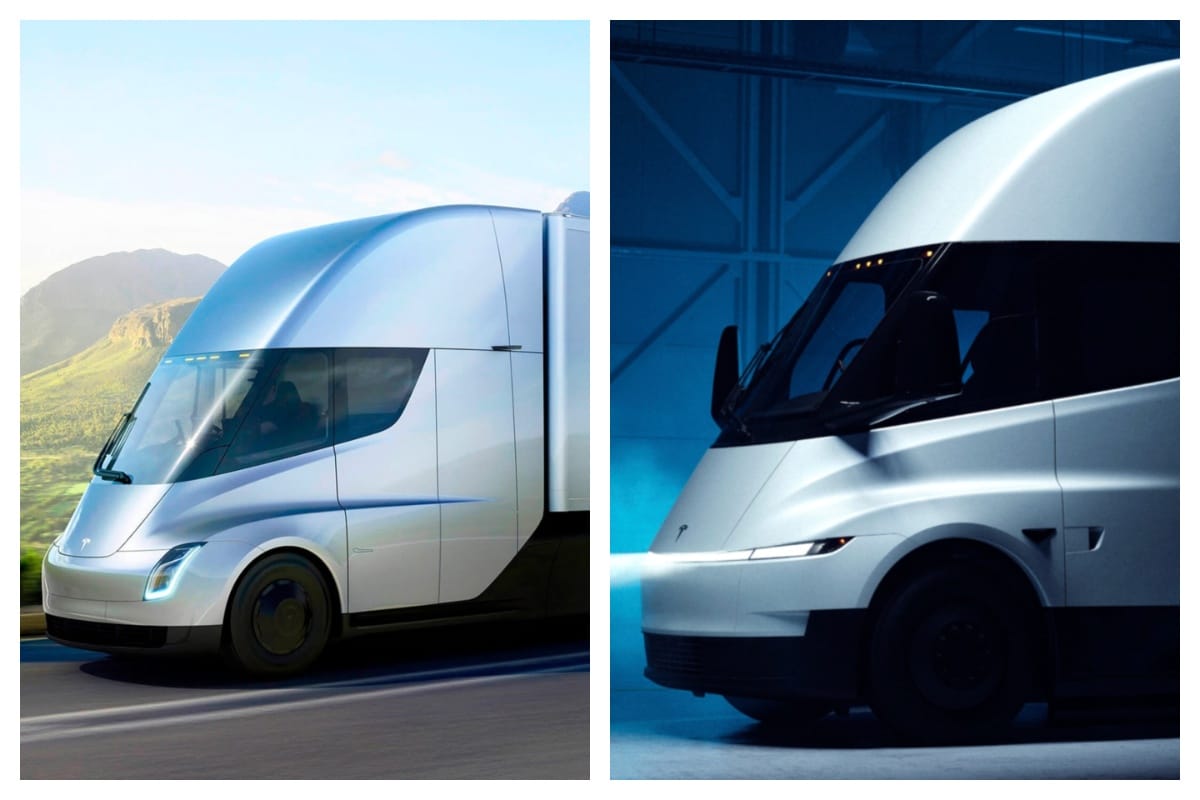
Tesla Semi Receives Major Redesign Ahead of Factory Deliveries
Key Takeaways
- Tesla’s redesigned Semi truck aims to disrupt the trucking industry with its advanced features and efficient performance.
- The new design includes a blade-like light bar and enhanced aerodynamics, improving efficiency to 1.7 kWh per mile.
- Increased payload capacity allows companies to transport more goods per trip, enhancing logistical capabilities.
- Tesla’s Semi Factory is nearing completion, with a production capacity of about 50,000 units annually.
- California is developing a charging corridor for electric trucks, while another corridor is being built from Southern California to Texas, funded by the Department of Transportation.
- Companies like PepsiCo and Frito-Lay are already integrating the Semi into their fleets with positive feedback on its performance.
- Elon Musk noted the “ridiculous demand” for the Semi, highlighting its popularity before its public release.
In a world where efficiency and sustainability are becoming paramount, Tesla’s redesigned Semi truck is making waves in the trucking industry. With its cutting-edge features and advanced technology, the Tesla Semi aims to set new standards and disrupt traditional trucking norms.
The Major Redesign: What’s New?
Tesla’s Semi truck has undergone a significant redesign, aiming to enhance both aesthetic appeal and functionality. Here are the standout changes:
- Blade-like Light Bar: The new design incorporates a sleek light bar, giving the truck a modern look akin to Tesla’s latest vehicles like the Model Y and Cybertruck.
- Enhanced Aerodynamics: Modifications in design result in an increased efficiency, reaching a remarkable 1.7 kWh per mile, setting a benchmark in the industry.
- Increased Payload Capacity: With more load capability, companies can now carry additional goods, optimizing delivery and reducing logistical costs significantly.
These updates not only improve the truck’s utility but also align with Tesla’s mission of driving the transition to sustainable energy.
Tesla Semi Factory: A Powerhouse of Production
Tesla’s new Semi Factory, located next to its Gigafactory in Reno, Nevada, is nearing completion. This facility is anticipated to be a significant production hub with an annual output of approximately 50,000 units. The factory represents a monumental step in scaling the production of electric trucks, making them more accessible to a broader market.
Building the Future: Charging Infrastructure
For electric vehicles, charging infrastructure is as crucial as the vehicles themselves. Here’s what’s happening on this front:
- California’s Electric Truck Corridor: The state is investing $102 million to develop a charging corridor running from Washington to Southern California, ensuring seamless travel for electric trucks.
- Southern California to Texas Corridor: A second major corridor aims to facilitate smooth interstate travel for electric Class 8 trucks, funded by $636 million from the Department of Transportation.
These developments will significantly boost the feasibility and appeal of electric trucks for long-haul transport.
Early Adoption and Market Demand
Leading companies such as PepsiCo and Frito-Lay have already integrated the Tesla Semi into their fleets, reporting positive outcomes. This early adoption indicates a strong market demand and sets a precedent for others in the industry.
Elon Musk has highlighted the “ridiculous demand” for the Semi, anticipating that it will rapidly become a staple in transportation fleets across the globe once publicly available.
A Promising Road Ahead
Tesla’s redesigned Semi truck heralds a new era in transportation, blending innovation with practicality. Its advanced features and robust infrastructure support are likely to encourage broader acceptance and adoption. As companies strive for efficiency and sustainability, the Tesla Semi offers a promising solution, potentially transforming the trucking industry forever.