The Future of Robotics: Tesla’s Optimus and Its Global Impact
Key Takeaways
- Elon Musk announced that Tesla’s Optimus pilot line in Fremont will produce up to one million units annually.
- There are ambitious plans to scale up production at other facilities, potentially reaching 10 million units per year at Gigafactory Texas.
- Musk humorously suggested a future 100-million-unit production line could be located on Mars.
- The Optimus robot is seen as pivotal in achieving sustainable abundance and transforming economic systems globally.
- Musk claims that Optimus could deliver superior medical care, surpassing human capabilities, and help eliminate poverty.
Elon Musk has always been at the forefront of innovation, constantly pushing the boundaries of technology and industry. His latest endeavor, the Tesla Optimus robot, aims not only to revolutionize robotics but also to create sustainable abundance and better healthcare worldwide. This article delves into Tesla’s production goals for Optimus, its potential impacts on global economic systems, and future scalability plans — including the whimsical idea of a production line on Mars.
Tesla’s Ambitious Production Targets for Optimus
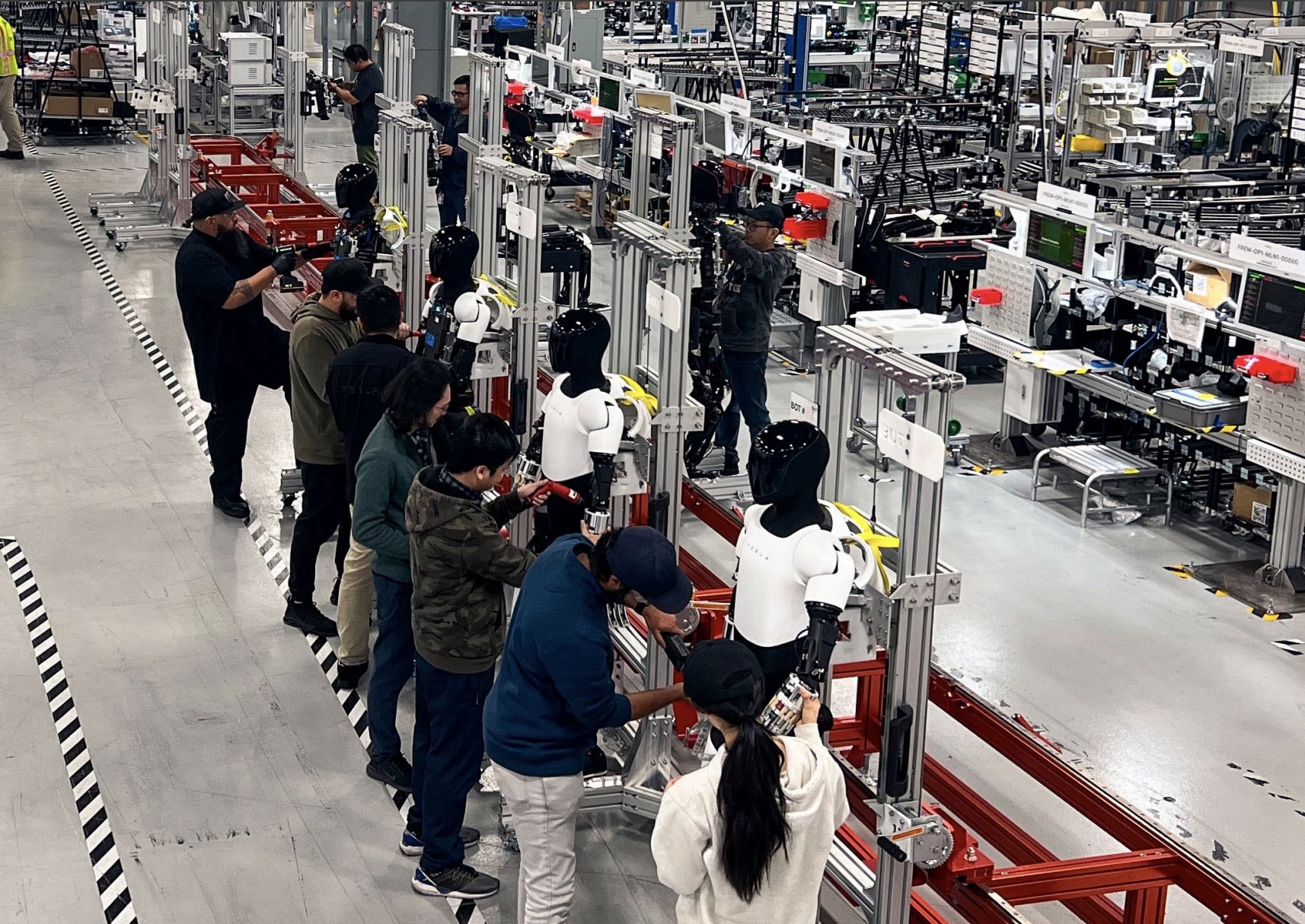
In a thrilling announcement during Tesla’s Annual Shareholder Meeting, Elon Musk revealed the company’s ambitious production targets for the Optimus robot. The pilot line in Fremont is projected to manufacture up to one million units annually, marking an aggressive entry into the robotics mass production arena.
Scaling Up Production
- Fremont Pilot Line: Initiates the production with a capacity of one million units per year.
- Gigafactory Texas Expansion: Plans to scale production to ten million units per year, leveraging Tesla’s existing infrastructure and expertise in vehicle manufacturing.
Musk’s vision doesn’t stop at these staggering numbers. In his typical forward-thinking manner, he suggested the humorous possibility of a 100-million-unit production line on Mars, hinting at even grander future expansions.
Optimus: A Catalyst for Economic and Social Transformation
Optimus is more than just a robotic innovation; it represents a harbinger of potential economic upheaval and social restructuring. According to Musk, the mass production of these humanoid robots could pave the way for sustainable abundance, significantly altering how services are delivered worldwide.
Economic and Social Implications
- Sustainable Abundance: Optimus aims to redefine global economic systems, offering enhanced service availability and efficiency.
- Eliminating Poverty: By automating tasks traditionally performed by humans, Optimus could lower costs and increase access to various services, contributing to poverty alleviation.
Advancing Healthcare Beyond Human Limits
One of the most profound claims by Musk is Optimus’s potential to transform healthcare. Musk envisions a world where Optimus robots deliver medical care superior to that of human surgeons, thanks to their ability to operate with unparalleled precision.
Healthcare Revolution
- Superior Medical Care: With precision beyond human capability, Optimus could set new standards in surgery and care delivery.
- Global Impact: This technological advancement could democratize healthcare, making high-quality medical services accessible across socioeconomic boundaries.
Looking to the Stars: Production Line on Mars
Elon Musk’s ambitious spirit is encapsulated in his joke about a Mars production line for Optimus. While fantastical, this idea underscores Tesla’s commitment to pushing limits and exploring unprecedented possibilities.
Future Prospects
- Interplanetary Manufacturing: Though hypothetical, the concept of a Mars-based production line highlights Tesla’s long-term visionary goals.
- Scaling Beyond Earth: This notion suggests the potential for technological growth that extends beyond our planet, indicative of Tesla’s innovative ethos.