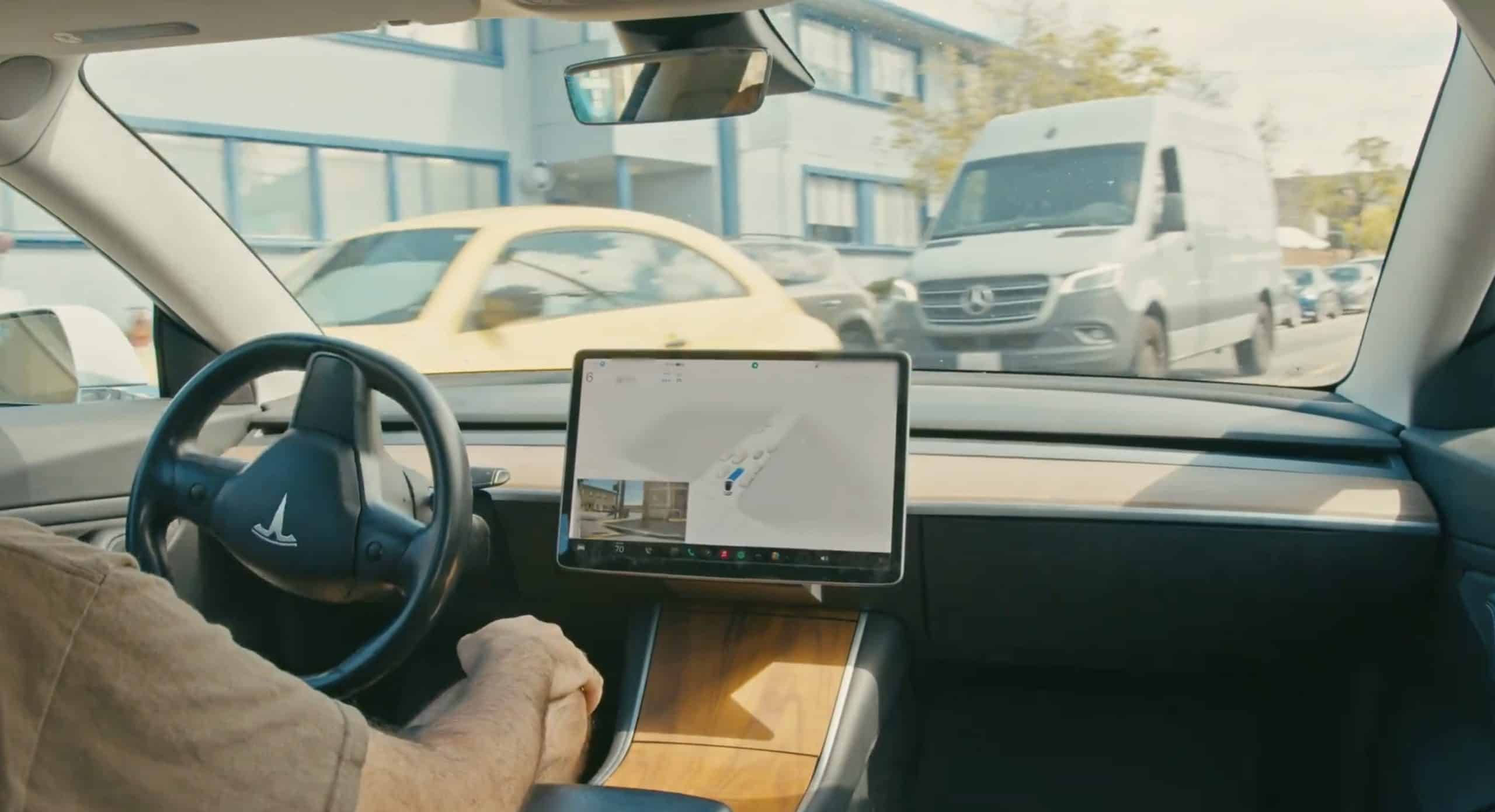
Tesla’s Full Self-Driving: Promise and Perception in 2025
Key Takeaways
- Tesla’s Full Self-Driving (FSD) has not shown any improvement throughout the year.
- Musk indicates that further updates will be awaited later this year, but specifics remain unclear.
- The latest FSD update, v13.2.9, has actually performed worse than previous versions, highlighting an ongoing stagnation.
- Musk admitted that HW3 vehicles will never support unsupervised self-driving capability, leading to dissatisfaction among owners.
- Data shows that FSD’s efficiency is still far from initial claims of enhanced performance, with notable improvements being significantly lower than promoted.
- Tesla’s “robotaxi” pilot in Austin does not translate to customer vehicles, as it relies on geo-fencing and teleoperation.
- Musk’s previous promises about improved capabilities have repeatedly missed expectations, raising skepticism about future claims.
In a world gradually embracing autonomous technology, Tesla’s Full Self-Driving (FSD) program is both a beacon of innovation and a subject of scrutiny. Recent developments in 2025 reveal a nuanced picture of Tesla’s journey towards fully autonomous vehicles. As Elon Musk continues to drive the vision forward, this post delves into the current landscape of Tesla’s FSD, the challenges faced, and the road ahead.
Tesla FSD: Current Status
As we move deeper into 2025, it’s clear that Tesla’s Full Self-Driving (FSD) technology has hit a plateau. Despite previous breakthroughs, the past year has shown little to no improvement in its capabilities. FSD v13.2.9, the latest version, has underperformed compared to its predecessors, contradicting the high expectations set by earlier projections.
Key Points of Stagnation
- FSD Performance Decline:
- The most recent update, v13.2.9, has showcased a regression in efficiency, falling short of anticipated results.
- Tesla’s promise of significant strides in autonomous driving has not materialized this year, with the technology still struggling to meet foundational benchmarks outlined in earlier roadmaps.
- Hardware Limitations:
- The reality for HW3 vehicle owners is sobering, as they are met with the admission from Musk that these models will not support unsupervised self-driving, a promise that initially drove customer interest and investment.
- Discrepancy in Data and Reality:
- Despite Elon Musk’s bold claims of exponential improvements, actual FSD performance data indicates much lower improvements. This disconnect fosters doubts about the reliability of future projections.


Tesla’s Robotaxi Program: A Shift in Focus
In apparent response to the stagnation in its FSD program, Tesla has pivoted some of its focus towards its “robotaxi” initiative, piloted in Austin, Texas. This project, however, is limited in scope and applicability, functioning within a geo-fenced area heavily reliant on teleoperation support.
Implications of the Robotaxi Program
- Limited Scalable Impact:
- While impressive as a contained experiment, the current state of Tesla’s robotaxi fleet has a limited direct impact on general consumer vehicles. Its dependency on geo-fencing and teleoperation is not sustainable across a global fleet.
- Potential for Future Application:
- Lessons learned and technology developed from this pilot may eventually contribute to broader FSD progress, but immediate benefits to existing Tesla owners remain minimal.
The Future of Tesla’s FSD: Promises vs. Reality
The narrative of Tesla’s FSD journey is peppered with bold declarations from Elon Musk, whose timeline predictions have historically been overly optimistic. With Musk anticipating another major update later this year, the automotive world watches with cautious optimism.
Challenges Ahead
- Bridging the Gap Between Perception and Reality:
- Overcoming technical hurdles to achieve the ambitious goals of unsupervised driving is paramount. Ensuring that proclaimed advancements are supported by data will be crucial in restoring consumer confidence.
- Hardware and Software Synchronization:
- As demands for more sophisticated autonomous capabilities rise, the harmony between Tesla’s hardware and software ecosystems will determine the extent of future improvements.
Tesla’s journey toward a fully functional FSD has been one of great ambition tempered by the realities of technological and logistical challenges. While Musk’s vision has yet to be fully realized in 2025, Tesla’s ongoing efforts in automotive innovation keep the company at the forefront of the push towards autonomous driving. As stakeholders await the next big update, the broader implications for the automotive industry and autonomous technology continue to unfold.