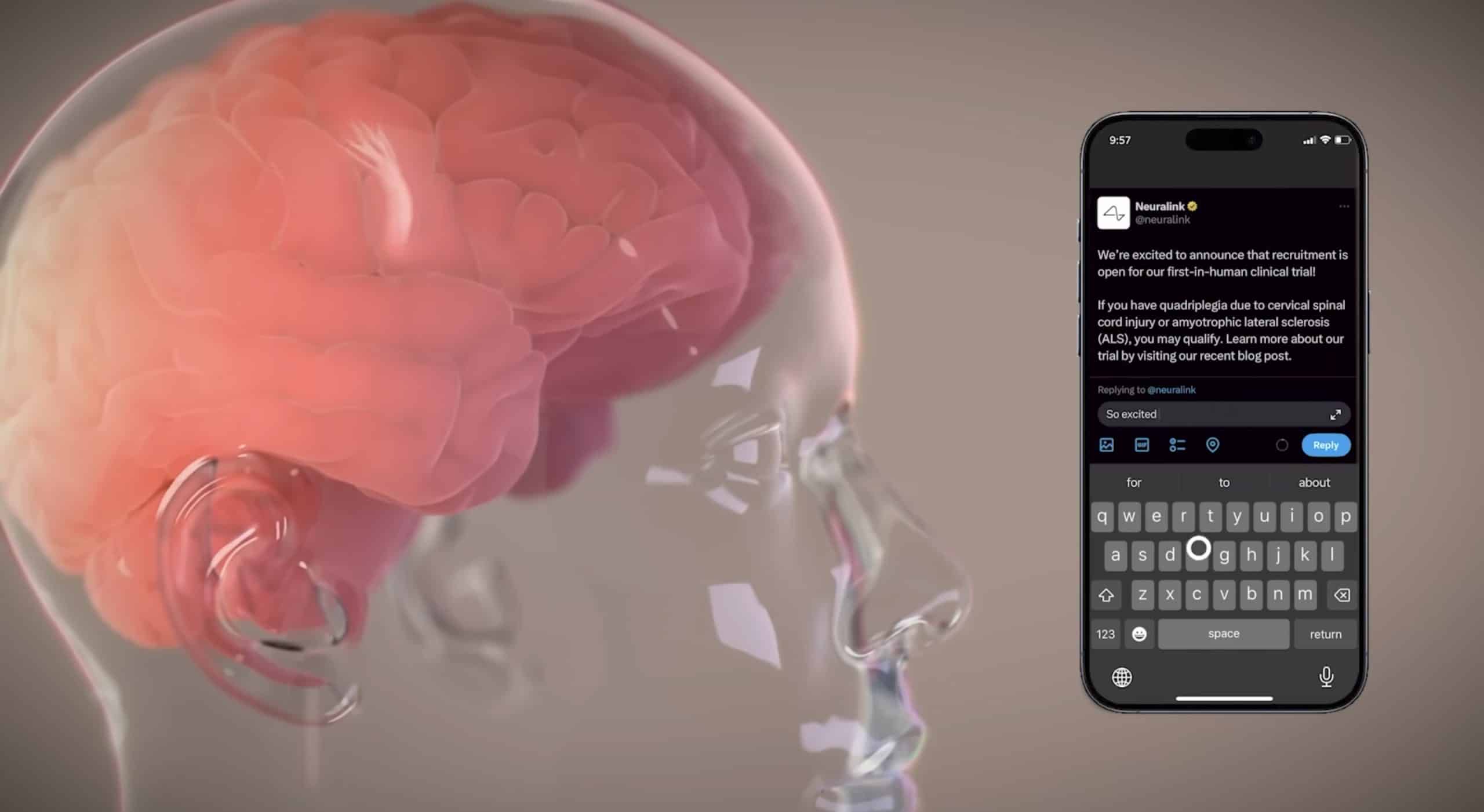
Transforming Lives: How Neuralink’s Link Device Offers New Hope for Those with Speech and Mobility Impairments
Key Takeaways
- Neuralink’s Link device has received FDA’s “breakthrough” designation for aiding communication in individuals with severe speech impairments.
- The device is aimed at those with neurological conditions such as ALS, stroke, and spinal cord injuries.
- Bradford G. Smith, living with ALS, exemplified Link’s capabilities by communicating and controlling a computer with his brain.
- Before using Link, Smith’s communication was limited by an eye tracker; the new device vastly improves his mobility and freedom.
- Neuralink is also investigating vision restoration and other health applications, even as its main focus remains on mobility and communication.
- The company is expanding its trials globally, with studies like PRIME exploring Link’s base capabilities and CONVOY assessing its control over robotic devices.
- Neuralink is reportedly in talks for a significant funding round that could value the company at up to $9 billion, highlighting its growth ambitions.
In a world where technology and healthcare intersect to unlock unprecedented possibilities, Neuralink’s Link device is paving the way for remarkable advancements in assisting individuals with severe speech and mobility impairments. As the U.S. Food and Drug Administration (FDA) has granted this breakthrough technology a special designation, the implications for individuals suffering from various neurological conditions are profound. Join us as we explore the ways this innovative brain-computer interface (BCI) is poised to transform lives.
The Pioneering Technology Behind Neuralink’s Link Device
Neuralink, founded by tech mogul Elon Musk, has long aimed to merge human cognition with digital interfaces. Their latest innovation, the Link device, serves as a testament to this mission. By utilizing a sophisticated BCI, the device is set to revolutionize how we approach communication for those with impairments caused by conditions like Amyotrophic Lateral Sclerosis (ALS), strokes, and spinal cord injuries.
Key Features of the Link Device
- FDA “Breakthrough” Status: This prestigious designation highlights the device’s potential to offer significant advantages over existing alternatives, setting a new standard in medical technology.
- AI-Powered Communication: Utilizing artificial intelligence, the device enables users to express themselves more naturally and efficiently, often by reconstructing their former voice.
- Enhanced Mobility and Freedom: By providing an interface that can control external devices, the Link device grants users greater autonomy in their daily lives.
Real-World Impact: Bradford G. Smith’s Story
A vivid demonstration of the Link device’s transformative power is evident through Bradford G. Smith, a man living with ALS. Previously dependent on an eye-tracking system that faltered in bright conditions, Smith now uses the Link device to type, operate a computer cursor, and even edit video content using only his thoughts. This newfound ability has dramatically improved his quality of life and independence.
Expanding Horizons: Neuralink’s Ongoing Research and Trials
Current Focus Areas
While the immediate focus remains on aiding communication and mobility, Neuralink is exploring broader applications:
- Vision Restoration: The company is examining how similar technologies might help those with complete vision loss regain their sight.
- Control of Robotic Devices: Ongoing studies like the CONVOY are investigating how the Link device can manage robotic limbs and other assistive devices.
Global Expansion of Trials
Neuralink’s commitment to scaling its impact is evident in its expanding trials beyond U.S. borders. The company’s patient registry now includes participants worldwide, underscoring a vision of global accessibility and integration.
The Financial Landscape: Investment and Market Outlook
In line with its major breakthroughs, Neuralink is reportedly in discussions for a significant funding round that could value the company at $9 billion. Such financial momentum speaks to investor confidence in the company’s potential to redefine our interaction with technology, especially in the healthcare sector.
Final Thoughts: A Transformative Future Awaits
Neuralink’s Link device not only represents a breakthrough in medical technology but also offers a glimpse into a future where neurological impairments needn’t limit communication or mobility. As Neuralink continues to expand its research and implementation, it holds the promise of returning independence and dignity to countless individuals worldwide.