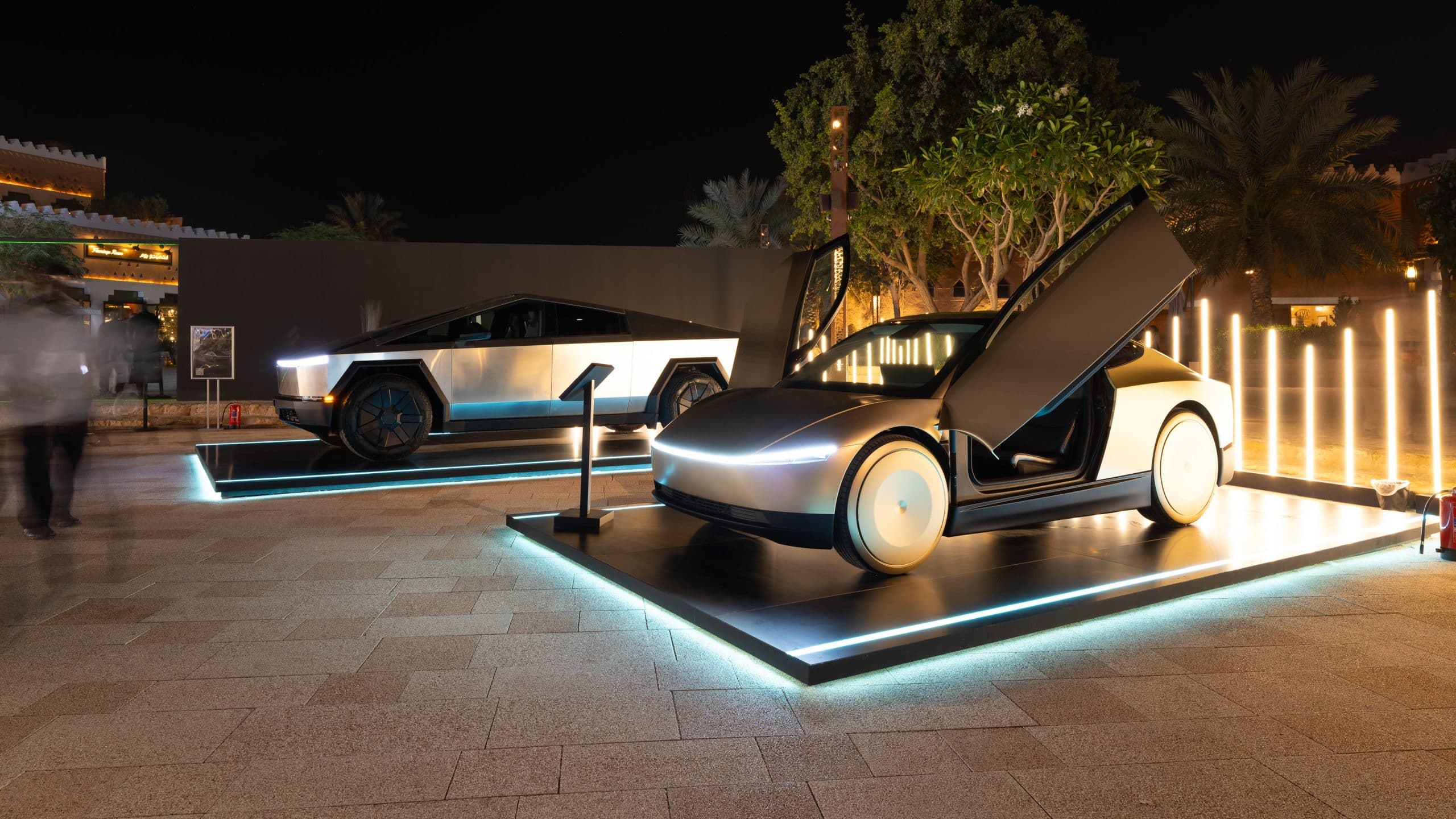
Tesla Gears Up Cybercab for Full Robotaxi Rollout Following Pilot Program
Key Takeaways
- Tesla is preparing the Cybercab for Robotaxi use after the pilot program in Austin, Texas.
- Drone footage from Gigafactory Texas, captured by Joe Tegtmeyer, reveals hundreds of Cybercab castings, indicating imminent production.
- Tesla plans to launch its first Robotaxi rides in Texas in June, initially using Model Ys with a supervised autonomous system.
- The Cybercab is a minimalistic, two-seater vehicle designed for full automation without human interaction.
- Footage suggests a quick transition to the Cybercab for Robotaxi duties, marking Tesla’s confidence in its unsupervised Full Self-Driving capabilities.
- Tesla’s VP of Vehicle Engineering, Lars Moravy, highlighted recent engineering advancements and successful early crash tests for the Cybercab.
- Future tests will focus on full-scale integration with Tesla’s manufacturing process, with test roads expected to see Cybercabs soon.
The world of autonomous vehicles is ever-evolving, and once again, Tesla is at the forefront of innovation. With the recent developments surrounding their Cybercab, Tesla is making bold strides toward a future where autonomous ride-hailing is a reality. In this blog post, we will delve into Tesla’s plans for the Cybercab, the implications for the Robotaxi platform, and the progress that has been made in testing and production.
Introduction to the Cybercab
Tesla unveiled the Cybercab as a minimalist, two-seater vehicle designed for full automation. It aims to transform the ride-hailing experience by eliminating the need for human drivers, thus reducing costs and improving efficiency. This innovation aligns with Tesla’s vision of a future dominated by autonomous vehicles, leveraging their Full Self-Driving (FSD) suite.
Preparation for Cybercab Launch
Drone Footage and Production Insights
Recent drone footage from Gigafactory Texas, captured by Joe Tegtmeyer, has revealed hundreds of Cybercab castings on-site. These castings suggest that Tesla is gearing up for the production phase, indicating the readiness of the Cybercab to join the Robotaxi fleet. This discovery provides tangible evidence that Tesla is serious about transforming the way we think about transportation.
Initial Rollout and Testing Phases
Tesla plans to launch its first Robotaxi rides in Texas as early as June. Initially, these rides will use Model Ys equipped with supervised autonomous systems. However, the rapid accumulation of Cybercab components hints at a swift transition to these new vehicles for Robotaxi services. This move underscores Tesla’s confidence in their unsupervised FSD capabilities.
Technological Advancements and Testing
Engineering Progress and Challenges
Lars Moravy, Tesla’s VP of Vehicle Engineering, has highlighted recent advances in Cybercab’s engineering. These include addressing issues like material corrosion, sealing across vehicle seams, and even conducting early crash tests. Such efforts signal Tesla’s dedication to ensuring safety and durability before full-scale deployment.
The Path to Full-Scale Integration
The upcoming tests will focus on integrating the Cybercab into Tesla’s general production and operational framework. The company’s strategy involves methodically testing the vehicle on roads to gather data and fine-tune the system. We can expect to see the Cybercabs on test roads soon, marking a critical phase in their journey toward commercialization.
Implications for the Robotaxi Platform
The introduction of the Cybercab is poised to significantly impact Tesla’s Robotaxi platform. By employing a vehicle specifically designed for autonomous operation, Tesla can streamline efficiencies, reduce dependency on human operators, and offer a more sustainable and scalable solution for urban transport.
The Road Ahead
Tesla’s Cybercab represents more than just a new vehicle; it symbolizes a leap into the autonomous age. As the pilot program progresses in Austin, Texas, the world will be watching closely. The success of the Cybercab could transform public perception of self-driving vehicles and shape the future of urban mobility.