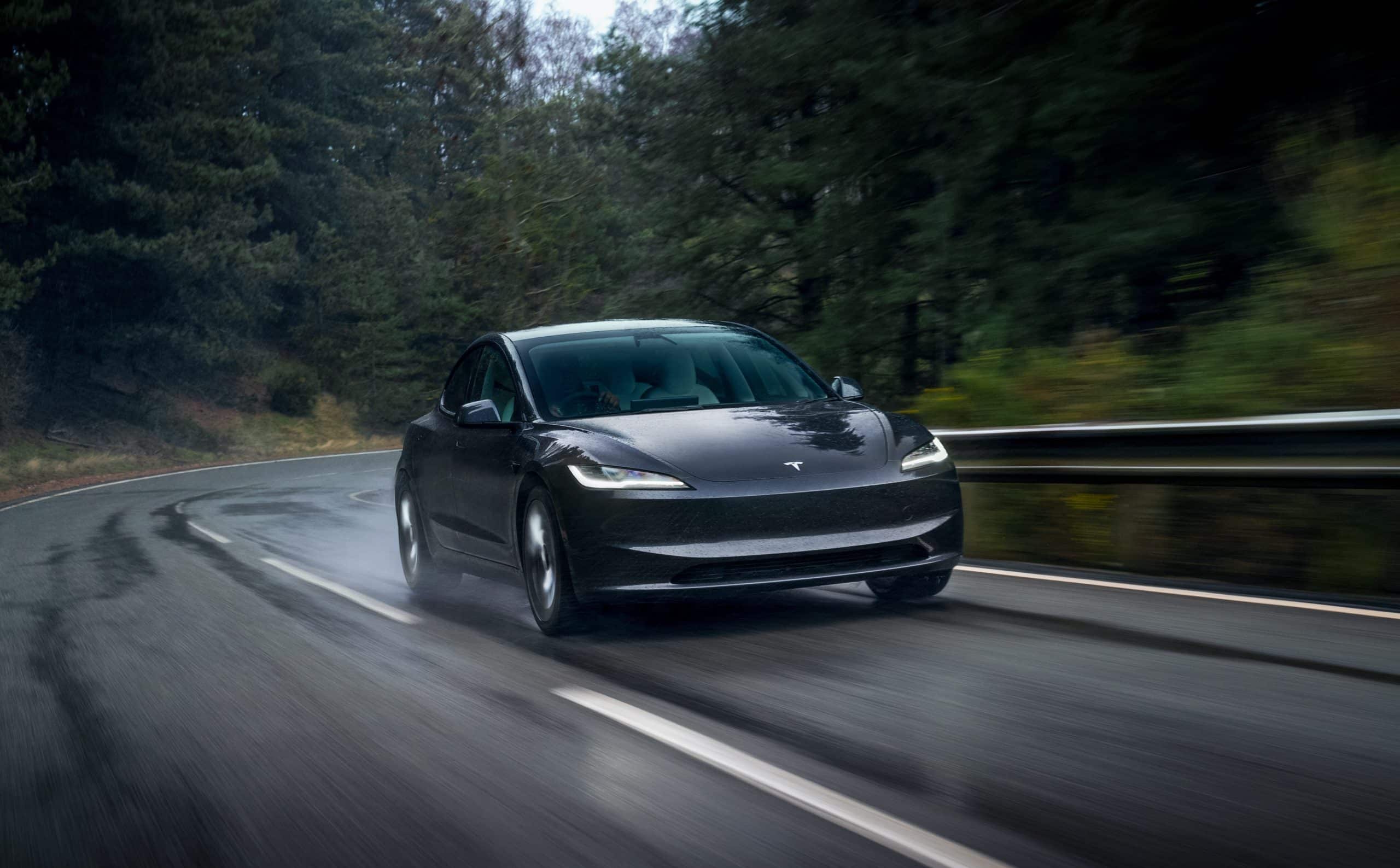
Tesla Model 3 Tops List of Lowest-Cost EVs to Own
Key Takeaways
- The Tesla Model 3 is recognized as the most economical electric vehicle to own, according to a study by Zutobi.
- Cost savings on EV ownership come from home charging, lower maintenance, and tax credits, motivating consumers to switch.
- The study analyzes EV cost-effectiveness on a cost-per-mile metric, revealing different efficiency levels among models.
- The Tesla Model 3’s Rear-Wheel Drive version costs only $3.60 per 100 miles, offering 2,781 miles per $100 of electricity.
- The Tesla Model 3 Long Range All-Wheel Drive version costs $3.75 per 100 miles, providing 2,665 miles per $100.
- The BMW i4 eDrive35 is highlighted as a competitive option, costing $4.12 per 100 miles while offering luxury.
- Other Tesla models like the Model 3 Performance, Model S Long Range, and Model Y Long Range also rank among the top in terms of cost-effectiveness.
The rise of electric vehicles (EVs) has been nothing short of revolutionary, shaping the future of the automotive industry. Among the vast array of EVs available today, the Tesla Model 3 has been highlighted as the most economical electric vehicle to own, according to a recent study by Zutobi. This examination delves into the intricate details of EV cost-effectiveness, showcasing why the Tesla Model 3 stands out in this rapidly growing sector.
EV Cost Savings: More Than Just a Trend
In recent years, the shift towards electric vehicles has been fueled by several significant factors.
Key Motivators:
- Home charging capabilities: Reduces fuel expenses compared to gasoline.
- Lower maintenance costs: Fewer moving parts mean less wear and tear.
- Tax credits and incentives: Governments worldwide offer incentives that effectively reduce the purchase price.
These elements collectively motivate consumers to consider transitioning from traditional combustion engines to EVs, with the promise of ongoing savings and environmental benefits.
Analyzing EV Cost-Effectiveness: The Cost-Per-Mile Approach
To truly understand the economic advantages of EVs, the cost-per-mile metric provides a comprehensive overview. Zutobi’s study applies this analysis to determine which vehicles offer more bang for the buck, thereby allowing potential buyers to make informed decisions based on their budget and driving needs.
General Findings:
- Energy Rates: National averages for energy rates were used, considering the variations across different states.
- Economic Efficiency: Cost assessed based on driving 100 miles.
The Tesla Model 3: Leading the Pack
Among the various models analyzed, the Tesla Model 3 triumphs as the pinnacle of economy.
Detailed Insights:
- Tesla Model 3 Rear-Wheel Drive:
- Cost: $3.60 to drive 100 miles.
- Efficiency: Provides 2,781 miles per $100 of electricity.
- Battery: 57.5 kWh with a real-world range of 260 miles.
- Tesla Model 3 Long Range All-Wheel Drive:
- Cost: $3.75 per 100 miles.
- Efficiency: Offers 2,665 miles per $100.
- Battery: Larger 75 kWh, extends range to 325 miles.
Competitors on the Horizon
While the Tesla Model 3 stands out, other vehicles like the BMW i4 eDrive35 emerge as worthy competitors in the luxury market.
BMW i4 eDrive35:
- Cost: $4.12 to drive 100 miles.
- Efficiency: Allows for 2,429 miles per $100.
- Highlights: Combines luxury with efficiency, appealing to a diverse market segment.
Other Noteworthy Mentions
Several other Tesla models have also gained recognition for their cost-effectiveness:
- Tesla Model 3 Performance: Tied with the Volkswagen ID.3 Pure at $4.34 per 100 miles.
- Tesla Model S Long Range: $4.35 per 100 miles.
- Tesla Model Y Long Range: $4.36 per 100 miles.
The Future of Economical Driving
As we look towards the future, the trend of growing EV adoption is inevitable. Continuing advancements in battery technology and recharging infrastructure promise to further enhance the economic and environmental benefits of owning an electric vehicle.
The Tesla Model 3’s status as the most economical EV isn’t just about numbers—it’s a testament to the shifting dynamics of automotive preference towards more sustainable and cost-effective options. With increasing consumer awareness and technological advancements, it stands as a beacon for future innovations.