Tesla’s Steering-Wheel-Free Cybercabs Emerge at Giga Texas: Production Reality Hits as Robotaxi Era Accelerates
Key Takeaways
- Drone footage reveals 14 new Cybercabs parked without steering wheels or pedals in the outbound lot at Gigafactory Texas.
- These vehicles are in final production form: no driver controls, no side mirrors, and minimalist interior from “We Robot” event.
- Unlike earlier test units with temporary controls for regulations, these are complete with production wheels and styling.
- Cybercab designed as purpose-built robotaxi for unsupervised Full Self-Driving, removing controls to cut costs and boost space/range.
- Signals Tesla cleared validation hurdles, now producing for commercial robotaxi service.
- Production ramping up since late 2025/early 2026, limited to 2,500 units/year without exemptions under FMVSS.
- Preparing small initial fleet likely for Austin pilots amid regulatory pushes at Gigafactory Texas.
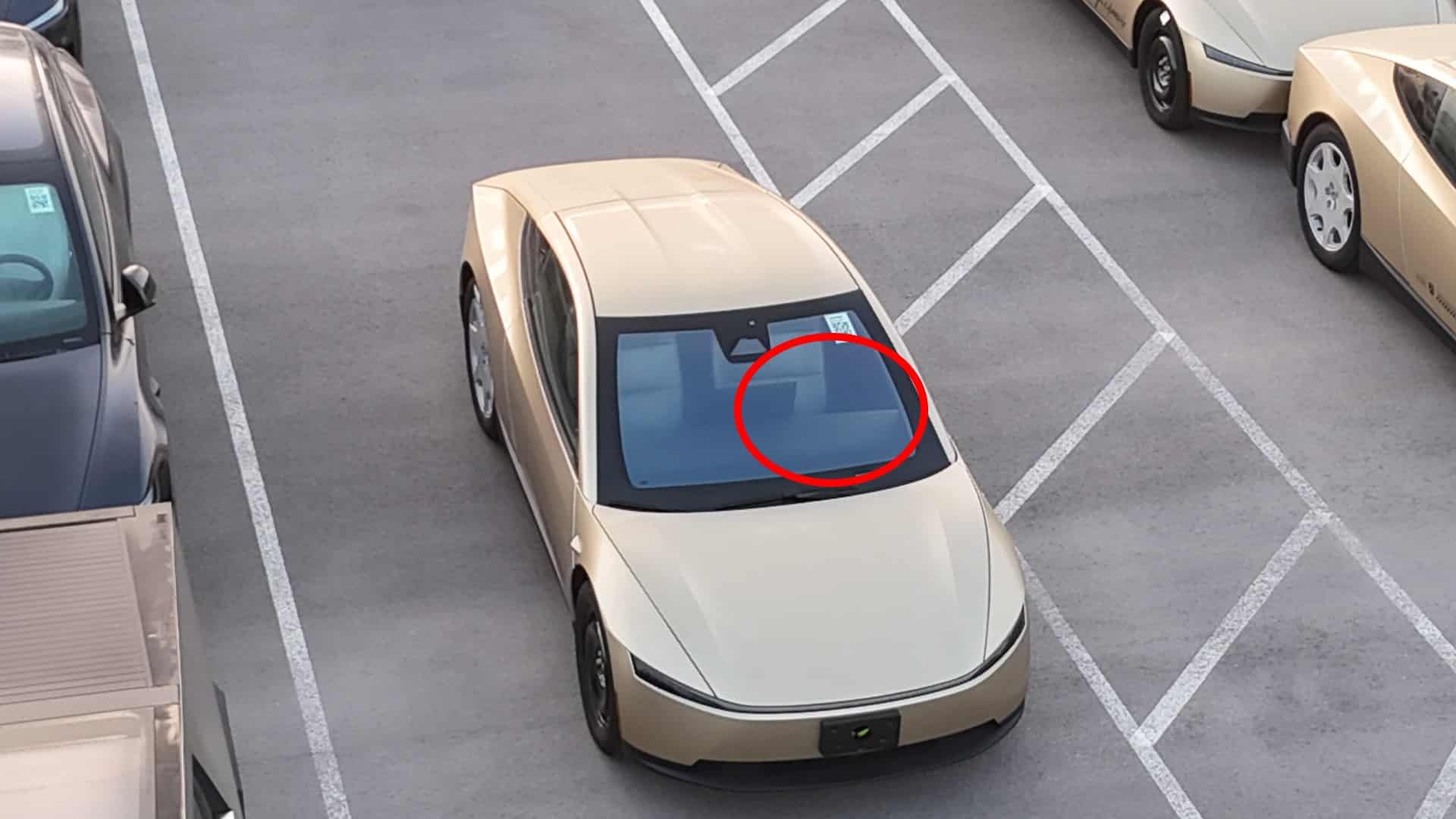
In a development that’s sending shockwaves through the EV and autonomy worlds, fresh drone footage from Gigafactory Texas has captured what appears to be the first batch of production-ready Tesla Cybercabs—14 units parked in the outbound lot, completely devoid of steering wheels, pedals, or side mirrors. This isn’t a prototype tease or regulatory workaround; these are final-form vehicles straight out of Elon Musk’s “We, Robot” vision, signaling Tesla’s aggressive push toward unsupervised Full Self-Driving (FSD) robotaxi fleets. The story goes back to the October 2024 unveil. and this sighting confirms we’re on the cusp of a transportation revolution. Let’s dive deep into the footage, the tech, the hurdles, and what it means for the future.❶ ❷
The Groundbreaking Drone Footage: 14 Cybercabs, Zero Controls
Enthusiast drone pilot Joe Tegtmeyer (@JoeTegtmeyer on X) has once again delivered gold from above Giga Texas. His latest flyover reveals14 pristine Cybercabslined up in the outbound validation lot, each one sporting production-spec wheels, butterfly doors, and that signature angular stainless-steel body. Crucially, there’s no sign of steering wheels or pedals—unlike earlier test mules that included temporary controls to comply with road regs during validation.❶ ❸
Key observations from the footage:
- Minimalist interiors: Matching the “We, Robot” prototypes, with wraparound screens, no physical controls, and seats optimized for two passengers (or cargo). ❹
- No side mirrors: Relying purely on cameras for 360-degree vision, cutting drag and costs.
- Production stickers and tires: These aren’t show cars; tire stickers indicate fresh-off-the-line status, ready for crash testing or fleet deployment. ❺
- Outbound lot positioning: Suggests they’ve cleared initial QA and are awaiting transport or on-site testing—possibly for the nearby crash test facility. ❻
This isn’t isolated; follow-up reports show the fleet growing to50+ unitsstaged across Giga Texas grounds, including crash test prep areas. Drone watchers have tallied up to 60 in recent weeks, with some already loaded onto trucks for external validation.❼ ❽
From “We, Robot” Hype to Production Reality
Rewind to October 10, 2024: Tesla’s “We, Robot” event at Warner Bros. Studios unveiled the Cybercab amid a sea of 20 hand-built units. Elon Musk promised a$30,000 (or less) two-seater robotaxiwith inductive wireless charging, no steering yoke or pedals, and a range north of 300 miles. The design was radical—sleek, low-slung, with gundeck doors and a focus on efficiency to slash operating costs to $0.20 per mile.❾ ❿ ⓫
Fast-forward to 2026:
- First unit off the line: February 17, 2026, at Giga Texas—steering-wheel-free from day one. ⓬ ⓭
- Ramp-up phase: Production kicked off slowly in late 2025/early 2026, hitting volume targets in April. Lines are designed for hundreds per week eventually, per supply chain reports. ⓮ ⓬
- Why no controls? Purpose-built for robotaxi ops: Saves ~$1,000-2,000 per unit, boosts interior space by 20%, improves aero/range. FSD hardware (HW5?) handles everything via cameras and neural nets. ❸
Cybercab Design Deep Dive: Engineered for Autonomy
The production Cybercabs match the event specs to a T:
| Feature | Details | Benefits |
|---|---|---|
| Seating | 2 passengers, forward-facing with ottomans | Maximizes space; convertible to lounge/cargo mode |
| Charging | Inductive pads (no plug) | Seamless fleet ops; 20-80% in 18 mins |
| Wheels | 18″ front, 21″ rear staggered | Efficiency-focused; production alloys confirmed ⓯ |
| Vision | 8+ cameras, no ultrasonic/radar | Pure Tesla Vision; software-upgradable |
| Materials | Stainless exoskeleton | Durable, low-maintenance for 1M-mile lifespan |
No mirrors mean lower drag (Cd ~0.2?), and the yoke-less cockpit prioritizes ride-sharing vibes over personal ownership.⓰
Regulatory Tightrope: FMVSS Limits and Exemption Plays
Here’s the elephant: Cybercab flouts Federal Motor Vehicle Safety Standards (FMVSS) No. 108 (mirrors), 111 (rearview), 141 (controls), etc. NHTSA exemptions cap non-compliant AVs at2,500 units/year per manufacturer—a bottleneck for Tesla’s millions-unit ambitions.⓱ ⓲
Progress:
- NHTSA shifts: April/May 2025 guidelines eased crash reporting; forums with Tesla showcase Cybercab compliance paths. ⓳ ⓴
- Crash testing ramps: Dozens at Giga Texas dummy-crash facility; aiming for partial FMVSS certs (e.g., crashworthiness). ❼
- State-level wins: Texas/AVITA approvals for unsupervised FSD pilots; Austin geo-fenced ops imminent.[21]
Without full exemptions, initial fleets stay small—perfect for data-gathering in Austin before scaling.
Giga Texas Fleet Plans: Austin Pilots on Horizon
Giga Texas is ground zero:
- Current tally: 14-60+ units staged; some shipping for road mapping/testing in Austin, CA, other hubs.[22][23]
- Phased rollout:
- Validation/testing (now-April 2026).
- Austin robotaxi pilots (Q2 2026): Safety drivers phase out per Musk.[21]
- Network expansion: 2027+ to 10+ cities.
- Factory expansions: New lines for Cortex platform (Cybercab + affordable EV); N-campus for semis.[24]
Insights and Opinions: Why This Changes Everything
this footage is bullish AF. Tesla’s nailed the hard part—uncrewed production at scale—while rivals like Cruise/Waymo limp with retrofits. Cost savings? Game-changer: Robotaxis at 1/5th Uber fares could disrupt $10T mobility market.
Risks to watch:
- FSD reliability: Needs 10B+ miles for unsupervised safety stats.
- Regs: 2,500 cap forces lobbying; Trump-era DOT friendly?
- Competition: Zoox/Mobileye scaling manned fleets.
Advice for investors/readers:
- Buy TSLA dips; robotaxi > EVs long-term.
- Early adopters: Monitor Austin for ride-hailing apps.
- Owners: FSD subscriptions now for fleet data moat.
The Cybercab fleet at Giga Texas isn’t hype—it’s hardware readiness. By summer, Austin streets could host the first wheel-free Teslas hauling passengers. Buckle up (figuratively); autonomy just went prime time.