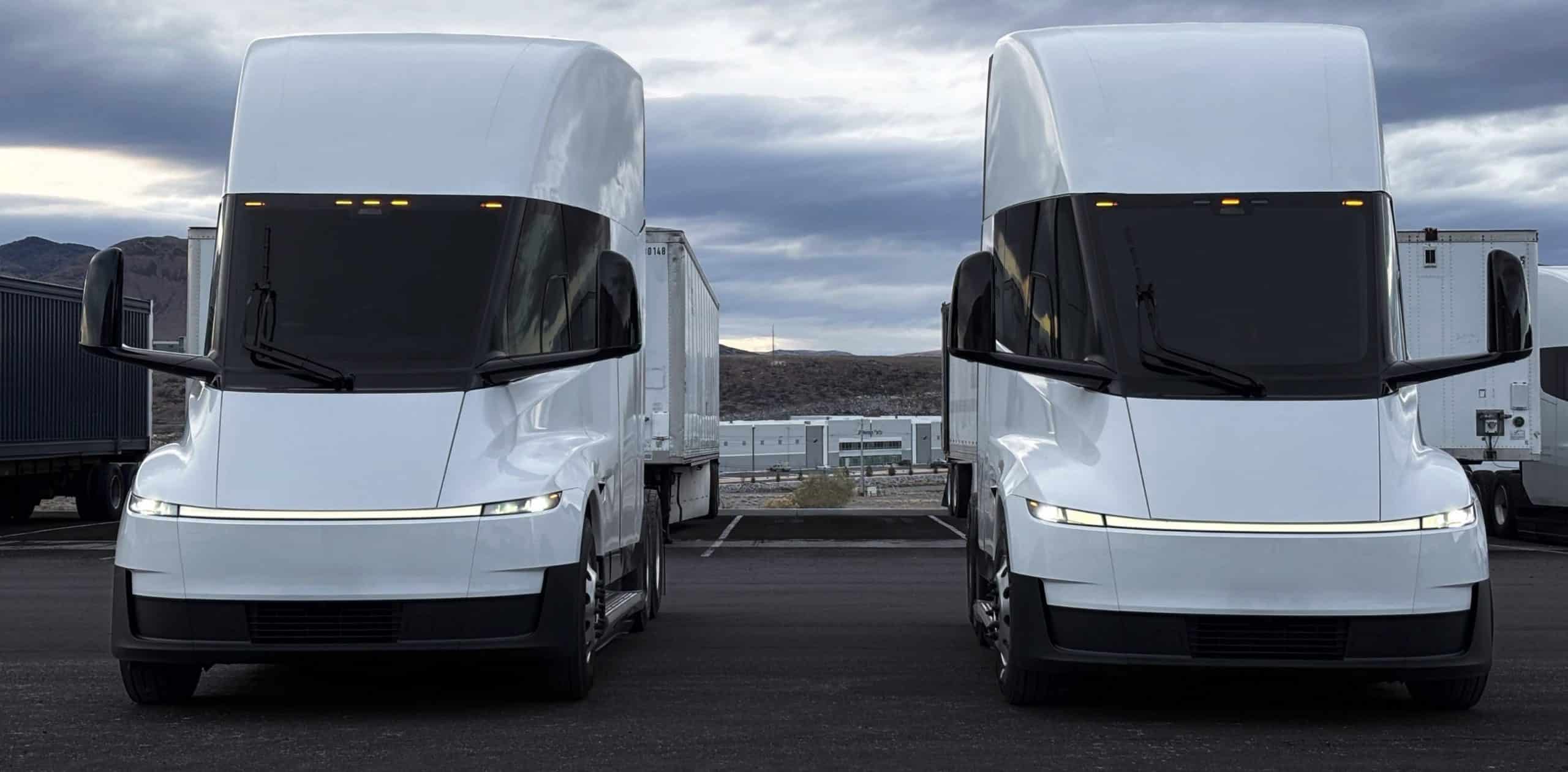
Tesla Semi Pricing Revealed: $250K Entry Point in 2026 – Revolutionizing Trucking or Just Another Delay?
Key Takeaways
- Tesla Semi pricing revealed: Standard Range at $250,000 and Long Range at $290,000 (before taxes/fees), per Electrek report on company communications.
- Prices higher than 2017 unveil ($150k for 300-mi, $180k for 500-mi, $200k Founders Series) due to inflation and factors.
- Dedicated factory in Sparks, NV; groundbreaking 2024, nearly complete late 2025, mass production in 2026 at 50,000 units/year capacity.
- Two trim levels (Standard and Long Range) suit local/regional deliveries; volume production confirmed by Elon Musk this year.
- Positions as competitor to electric semis from Volvo and others.
- Tweet by Walter Bloomberg (@DeItaone) highlights $290,000 quote for 500-mile Long Range version.
The electric truck revolution is accelerating, and Tesla’s long-awaited Semi is finally shifting into high gear. After nearly a decade since its flashy 2017 unveiling, Tesla has started quoting prices to interested fleet operators: around $250,000 for the Standard Range model and $290,000 for the Long Range version (before taxes and fees).❶ ❷This news, broken by Electrek and echoed in a viral tweet from market watcher Walter Bloomberg, comes just as CEO Elon Musk confirms high-volume production kicks off in 2026.❸But with prices 60-70% higher than originally promised, is the Semi still a game-changer for logistics giants like PepsiCo and UPS? and what this means for the future of freight.
A Rocky Road: From 2017 Hype to 2026 Reality
Remember November 2017? Elon Musk rolled out the Tesla Semi amid fireworks and bold claims: a 500-mile range on a single charge, 0-60 mph in 20 seconds fully loaded (5 seconds empty), and pricing starting at$150,000for the 300-mile version,$180,000for 500 miles, and a premium$200,000 Founders Series. ❷Reservations poured in—over 500 from major fleets—but production? Crickets for years.
Delays piled up: battery supply issues, COVID disruptions, and Tesla’s focus on Cybertrucks and 4680 cells. Pilot builds started in 2023 for Pepsi, logging real-world miles (one even won a range test against Volvo, Freightliner, and Nikola).❹By late 2025, the dedicated Semi factory in Sparks, Nevada—adjacent to Gigafactory Nevada—was nearly complete, with “online builds” underway.❺Musk’s recent X post? “Tesla Semi starts high volume production this year.”❸
Key Milestones:
- 2017: Unveil and reservations.
- 2023-2025: Pilot production, Pepsi deliveries.
- 2024: Sparks factory groundbreaking.
- Late 2025: Factory near-complete.
- 2026: Mass production at 50,000 units/year capacity. ❻
This timeline positions Tesla to capture a slice of the $500B U.S. trucking market, where diesel rigs guzzle fuel and spew emissions.
Pricing Breakdown: Inflation Bites, But Value Shines?
Fast-forward to 2026: Tesla’s now whispering to buyers via private channels (no public MSRP yet, as it’s B2B).❷
| Trim Level | 2017 Promised Price | 2026 Quoted Price | Range (Loaded at 82,000 lbs GCW) |
|---|---|---|---|
| Standard Range | $150,000 (300 mi) | ~$250,000-$260,000 | ~325 miles |
| Long Range | $180,000 (500 mi) | ~$290,000-$300,000 | ~500 miles |
| Founders Series | $200,000 | N/A | Limited edition phased out |
Why the hike? Inflation (CPI up ~40% since 2017), advanced 4680 batteries, and three-motor powertrains aren’t cheap. Yet, these quotes undercut diesel Class 8 trucks ($200K-$250K base) when factoring lifetime savings.❼
My Take: Smart fleets won’t blink. At 1.7 kWh/mile efficiency, a Long Range Semi costs ~$0.20/mile on electricity (at $0.12/kWh industrial rates) vs. $0.70/mile for diesel (6 mpg, $3.50/gal). That’s70% lower operating costsover 1M miles. Add zero oil changes, regenerative braking, and 99.99% uptime? Payback in 2-3 years.
Specs That Crush the Competition
Tesla finally dropped official specs on its Semi page—two trims optimized for regional/local hauls.❽
Shared Features:
- Powertrain: Tri-motor AWD (independent rear axles), up to 800 kW peak (1,072 hp!).
- Efficiency: 1.7 kWh/mile loaded.
- Charging: Megachargers add 60% in 30 min (up to 1 MW).
- Curb Weight: <20,000 lbs (Standard); slightly higher for Long Range.
- Tech: Full Self-Driving hardware, 360° cameras, no driver-side mirror.
Standard vs. Long Range:
- Standard: 325-mile range – perfect for drayage/port runs.
- Long Range: 500 miles – line-haul king, matching diesel without refueling stops. ❾
In real tests, Pepsi’s pilots hit 500+ miles unloaded, outpacing rivals.❿
Factory Ramp: Sparks Nevada Comes Online
Gigafactory Nevada’s Semi annex is a beast: 50,000 units/year at full tilt.⓫Ground broken 2024, operational late 2025, with 37+ Megacharger sites planned for 2026 (many with Pilot Flying J).⓬Supply chain hiccups linger (4680 yields), but Musk’s “high-volume” vow signals confidence.⓭
Advice for Fleets: Reserve now—priority like Founders. Tesla’s service network expands with Semi-specific bays.
Head-to-Head: Tesla Semi vs. Volvo & Others
Volvo’s VNR Electric has 5,000+ units sold—shorter 150-275 mile range for regional use.⓮Price? ~$400K+. Freightliner eCascadia (similar range) hits $500K. Nikola’s hydrogen flop? Bankrupt vibes.
Quick Comparison:
- Tesla Semi Long Range: 500 mi, $290K, 1.7 kWh/mi, FSD.
- Volvo VNR: 275 mi max, higher price, less efficient. ⓯
- Edge: Tesla’s range + autonomy crushes for highways.
Volvo leads in volume now, but Semi’s scale will dominate by 2028.
Total Cost of Ownership: The Real Winner
Ditch the fuel myth. A diesel semi: $150K/year fuel/maintenance for 100K miles.
- Semi: $30K electricity + minimal service = $80K savings/year.
- ROI: 24-36 months.
- Emissions: Zero tailpipe – key for CARB/California regs.
Pro Tip: Pair with solar Megapacks for off-grid depots. Fleets like Frito-Lay are already proving it.
Outlook: 2026 and Beyond
Tesla’s timing is impeccable—diesel prices volatile, IRA incentives ($40K/truck tax credit), Biden-era grants flowing. Challenges? Scaling batteries, charger buildout, union aversion. But with 30+ Megachargers live and 46 public sites incoming, infrastructure’s ready.⓰
Bold Prediction: 10,000 Semis on roads by 2027, capturing 5% Class 8 EV market. Logistics? Transformed—autonomous convoys by 2030.
The Semi isn’t cheap upfront, but it’s the diesel killer we’ve waited for. Fleets: Get in line. Investors: TSLA moonshot.
What do you think—game-changer or overpromise? Drop comments below!