Tesla Cybercab’s Rear Charging Port Bombshell: Bridging Wireless Dreams and Wired Realities Before April 2026 Launch
Key Takeaways
- Tesla Cybercab prototypes spotted testing publicly on US roads with a rear-mounted charging port featuring a manual door and latch.
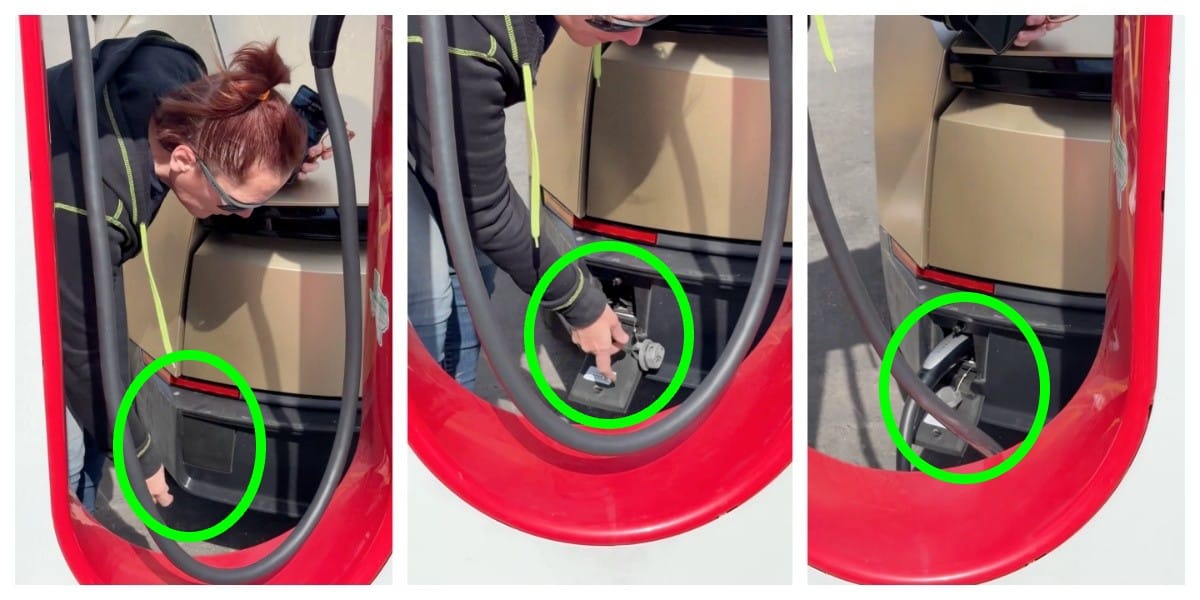
- Video from @Teslarati shows an employee plugging the Cybercab into a Tesla Supercharger.
- Cybercab designed as fully autonomous vehicle without steering wheel or pedals, handling driving, charging, and cleaning autonomously.
- Tesla plans wireless induction charging for future, but prototypes need wired option as it’s not ready yet.
- Ideal setup: induction for quick operational stops, wired charging during 45-minute cleaning/maintenance at hubs.
- Challenges with induction: significant heat and energy loss, similar to complaints about Tesla’s in-car wireless pads.
- Production starts in April 2026; short-term use of rear port for Supercharging, potentially phased out later.
prototype sightings that spark endless speculation are a recurring pattern here. But few have ignited as much buzz as the latest Tesla Cybercab footage captured on U.S. roads. A simple video of an employee plugging in what appears to be a production-intent Cybercab prototype at a Supercharger has the community abuzzu2014revealing a rear-mounted NACS charging port complete with a manual door and latch.u2776This isn’t just a quirky detail; it’s a pragmatic nod to the real-world challenges of scaling a fully wireless robotaxi fleet. With production slated to kick off in April 2026, this sighting offers crucial insights into how Tesla plans to keep its autonomous fleet humming.u2777
In this deep dive, we’ll unpack the prototype details, dissect the wireless vs. wired debate, analyze production hurdles, and share analysis on why this hybrid charging strategy could be Tesla’s ace in the hole for robotaxi dominance.
The Viral Sighting: Cybercab Hits the Supercharger
It all started with a tweet from Teslarati on January 29, 2026, showcasing a Cybercab prototype in action. The vehicleu2014sleek, doorless, and unmistakably futuristicu2014was spotted publicly testing on roads across the U.S., from Austin streets to highways.u2778 u2779In the clip, a Tesla employee manually opens a rear panel, revealing a standard North American Charging Standard (NACS) port, and plugs it into a Supercharger. No robotic arm, no magicu2014just good old-fashioned cable work.
Key observations from the footage:
- Location: Rear-mounted port, likely for easy access in fleet depots or during testing.u00a0u2776
- Manual features: A flip-up door and latch suggest human intervention is still part of the equation for prototypes.u00a0u277a
- Context: These are pre-production mules, some even sporting temporary steering wheels and pedals for safety drivers during public road validation.u00a0u2779
This isn’t the first Cybercab road testu2014prototypes have been transforming Austin’s urban landscape since late 2025, enduring everything from highway runs to winter trials in Alaska.u277b u277cBut the charging reveal has shifted focus from autonomy hardware to the unglamorous logistics of keeping these wheel-less wonders powered.
Cybercab 101: Autonomy Without Compromise
For the uninitiated, the Tesla Cybercab is no ordinary EV. Unveiled as Tesla’s purpose-built robotaxi, it’s engineered for full self-driving (FSD) supremacy:
- No steering wheel or pedals: Pure autonomy via Tesla’s FSD suite, handling navigation, passenger hailing, and even cleaning.u00a0u2776
- Two-seater efficiency: Optimized for ride-sharing, targeting under $30,000 MSRP and 200+ miles of range.
- Fleet-first design: Intended for Tesla’s ride-hailing network, docking at hubs for maintenance.
Elon Musk has hyped inductive charging as the endgameu2014vehicles simply parking over pads for seamless top-ups. But as this prototype proves, Tesla’s playing it smart with redundancies.u277d
Wired Port vs. Wireless Future: The Hybrid Strategy Unpacked
Tesla’s vision is clear: wireless induction for operational efficiency. Picture Cybercabs zipping between rides, pausing over embedded chargers at hotels, airports, or curbside spots for quick boosts.u277eYet, the rear port tells a different story for now.
Why the Wired Backup Makes Sense
- Prototype Necessity: Wireless tech isn’t production-ready. These test mules need reliable Supercharging access across the U.S. network.u00a0u277d
- Hub Optimization: During 45-minute cleaning cycles at depots, a plugged-in NACS port could deliver a full chargeu2014far more efficient than trickle induction.u00a0u2776
- Cross-Country Reliability: For long-haul testing or early fleet ops, wired ensures no range anxiety.u00a0u277d
Wireless Charging’s Achilles Heels
Induction isn’t flawless, and Tesla knows it:
- Efficiency Losses: Up to 20-30% energy wasted as heatu2014echoing complaints about Tesla’s in-car phone pads.u00a0u277au00a0u277f
- Speed and Scale: Current pads are slow for EVs; scaling to Supercharger levels (250kW+) is a physics puzzle.u00a0u24eb
- Cost and Infrastructure: Embedding chargers everywhere? Massive CapEx for Tesla’s network.u00a0u24ec
My Take: Critics calling wireless “terrible” miss the pointu2014it’s not binary. A phased rollout (wired for v1, wireless pads proliferating later) mirrors Tesla’s FSD evolution. Smart fleets will mix both, just like airlines balance quick refuels with overnight charges.
Production Timeline: April 2026 Beckons, But Expect a Slow Burn
Musk confirmed Cybercab production ramps in April 2026, leveraging Giga Texas and new unboxed manufacturing.u2777 u24edBut don’t pop the champagne yet:
- “Agonizingly Slow” Ramp: Elon warns of low initial volumes, prioritizing quality over quantity.u00a0u24ed
- Battery Breakthroughs: Recent 4680 dry cathode fixes could accelerate this.u00a0u24ee
- Challenges Ahead: Supply chain kinks, regulatory nods for unsupervised FSD, and wireless maturation.
Timeline Breakdown:
| Milestone | Expected Date | Status |
|---|---|---|
| Prototype Testing | Now – Q1 2026 | Active on U.S. roads u24ef |
| Production Start | April 2026 | Confirmed, low volume u24ef |
| Fleet Deployment | Late 2026 | Ride-hailing in select cities |
| Wireless Maturity | 2027+ | Phased infrastructure buildout |
Expert Insights and Advice for Tesla Fans & Investors
From my vantage, this charging port is genius pragmatism. It buys time for induction R&D while enabling real-world data collection. For investors: Watch Q1 earnings for wireless prototypes. For early adopters:
- Fleet Operators: Prioritize hubs with NACS wallsu2014expect 80% charge in downtime.
- Cities: Embed pads in high-turnover zones to maximize utilization.
- EV Owners: Tesla’s phone pad woes? A previewu2014demand efficiency toggles.
The Cybercab isn’t just a car; it’s mobility’s future. This rear port? A bridge to that utopia.
What do you thinku2014wired crutch or essential lifeline? Drop your thoughts below!
“