Latest Posts

Tesla’s $100 Trillion Dream: Elon Musk’s “Not Impossible” Path to Dominance Through AI Convergence and Robotics

In the ever-evolving world of tech titans, few visions are as audacious as a $100 trillion market cap for Tesla. That’s not a typo—$100 trillion, nearly 65 times its current valuation of around $1.5 trillion, making it larger than today’s entire top 10 companies combined. Elon Musk himself called this “not impossible” on X, fueling speculation amid his companies’ accelerating “convergence.” As a tech investor and Tesla enthusiast with over a decade tracking Musk’s empire, I’m diving deep into Cathie Wood’s bold prediction, the latest convergence moves, Robotaxi/Optimus progress, and whether this sci-fi scenario could become reality by 2030 or beyond.
Seven Years On: The Tesla Roadster’s Cosmic Legacy and the Explosive Rise of SpaceX and Tesla

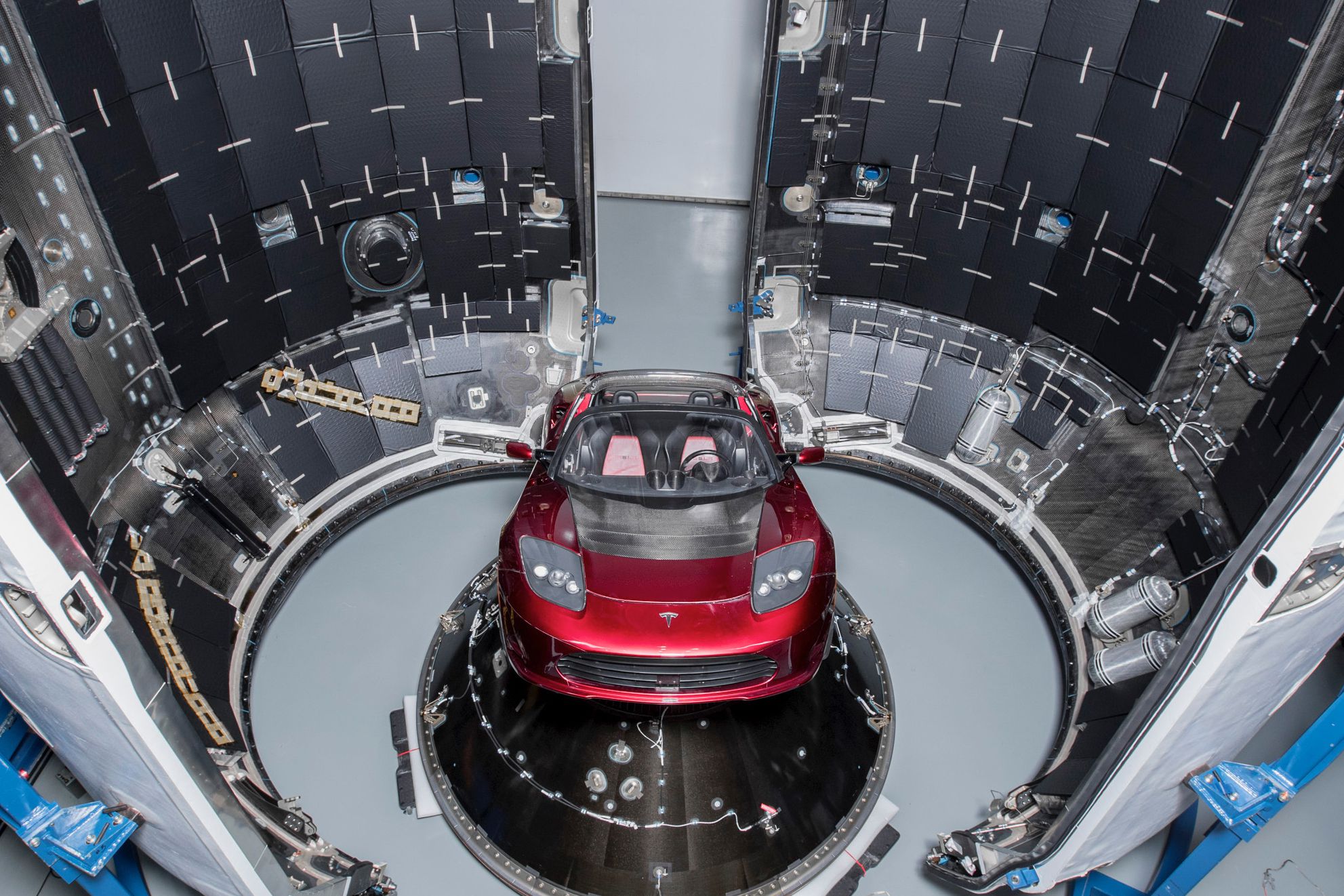
In the annals of space exploration, few moments capture the imagination quite like the Falcon Heavy’s maiden flight on February 6, 2018. Strapped atop this behemoth rocket wasn’t a satellite or scientific payload, but Elon Musk’s cherry-red Tesla Roadster, complete with a mannequin named Starman at the wheel, blasting David Bowie’s “Space Oddity” into the void. Critics called it a stunt; visionaries saw it as a declaration of intent. Fast-forward seven years to 2026, and that “stunt” has aged like fine wine, symbolizing the audacious risk-taking that propelled SpaceX and Tesla from precarious upstarts to trillion-dollar titans reshaping industries.

Tesla Cybertruck’s Powershare Grid Support: Turning Your Truck into a Grid-Saving Power Plant in Texas (and Soon California!)

Imagine your Cybertruck not just conquering off-road trails or hauling massive loads, but also stabilizing the electrical grid during peak demand—while padding your wallet with bill credits. That’s the promise of Tesla’s newly launched Powershare Grid Support program, a vehicle-to-grid (V2G) initiative kicking off in Texas. Announced just yesterday by the official Tesla Energy account on X, this “coming soon” feature builds on the Cybertruck’s existing bidirectional charging prowess, transforming it from a home backup beast into a community energy hero.

Elon Musk’s Masterclass in M&A: SpaceX Acquires xAI via Triangular Merger, Dodging Billions in Debt and Liabilities

As a tech and space industry veteran who’s tracked Elon Musk’s empire-building for over a decade, I can confidently say this week’s bombshell – SpaceX’s acquisition of xAI – isn’t just the largest M&A deal in history at $1.25 trillion; it’s a textbook example of surgical corporate strategy. Valuing SpaceX at $1 trillion and xAI at $250 billion, the deal consolidates Musk’s AI ambitions under his rocket powerhouse without the messy entanglements of debt, lawsuits, or taxes. But how? Enter the triangular merger – a structure so clever it feels like Musk pulled it from a sci-fi playbook. In this deep dive, we’ll unpack the mechanics, the wins, the risks, and what it means for SpaceX’s looming IPO and the future of orbital AI.

Elon Musk Crushes Starlink Phone Rumors: SpaceX Focuses on xAI Merger and Satellite Dominance

In the ever-buzzing world of Elon Musk’s tech empire, rumors of a “Starlink phone” have been swirling like satellites in low Earth orbit. Just yesterday, Reuters dropped a bombshell report suggesting SpaceX was gearing up to launch a direct-to-satellite mobile device to supercharge revenue ahead of a potential IPO. But true to form, Musk wasted no time shutting it down—twice—on X, declaring, “We are not developing a phone” and accusing Reuters of “lying relentlessly.” As a space tech blogger who’s tracked SpaceX’s meteoric rise for over a decade, this latest drama underscores a bigger picture: SpaceX is laser-focused on its core missions amid massive expansions like the recent xAI merger. Let’s dive deep into what really happened, why it matters, and what it means for the future of connectivity.

Will Tesla Be the Final Piece? Unpacking the SpaceX-xAI Mega-Merger and the Path to Musk’s “Trinity”

As a tech blogger who’s been tracking Elon Musk’s empire for over a decade—from Tesla’s early Roadster days to SpaceX’s Starship triumphs and xAI’s rapid Grok ascent—this week’s bombshell hits different. SpaceX has officially merged with xAI in a deal valuing the combined entity at a staggering $1.25 trillion, with SpaceX at $1T and xAI at $250B. This isn’t just corporate housekeeping; it’s the first domino in what could become Musk’s ultimate “Muskonomy”—a vertically integrated juggernaut blending AI, robotics, EVs, and space infrastructure. But the big question buzzing across Wall Street, X (formerly Twitter), and prediction markets: Is Tesla next?

Starlink Phone: SpaceX’s Game-Changing AI-Optimized Satellite Smartphone on the Horizon?

In the ever-evolving world of space technology, SpaceX continues to push boundaries beyond rockets and reusable spacecraft. The latest buzz from Reuters reveals that Elon Musk’s powerhouse is seriously considering a Starlink-branded phone – a dedicated mobile device designed to connect directly to the Starlink satellite constellation, bypassing traditional cell towers entirely. ❶ ❷ This isn’t just idle speculation; it’s a strategic pivot that could redefine global connectivity, especially as Starlink already dominates SpaceX’s revenue stream. As a space tech blogger who’s tracked Musk’s ventures for over a decade, I see this as the natural evolution of Starlink’s direct-to-device (D2D) ambitions – blending satellite internet with AI prowess in a handheld form factor.

SpaceX’s Bold Leap: FCC Accepts Filing for 1 Million Satellites to Power Orbital AI Data Centers

Imagine a sky filled not just with stars, but with a million tiny supercomputers orbiting Earth, guzzling endless solar power to crunch AI workloads that would cripple terrestrial data centers. That’s the audacious vision SpaceX just lodged with the FCC – and on February 4, 2026, the agency accepted it for review, kicking off a public comment period that could reshape computing, space policy, and humanity’s cosmic ambitions.

Boring Company’s Dubai Loop: Elon Musk’s Tunneling Empire Goes Global with UAE’s Ambitious Underground Network

As a blogger specializing in cutting-edge urban infrastructure and futuristic transportation solutions, I’ve been tracking The Boring Company’s evolution since its inception. From backyard experiments to operational mega-projects like the Vegas Loop, Elon Musk’s tunneling venture has redefined how we think about beating traffic congestion. But the latest bombshell? A definitive partnership with Dubai’s Roads and Transport Authority (RTA) to build the Dubai Loop – the company’s first-ever project outside the United States. Signed on the sidelines of the World Governments Summit 2026, this deal signals a massive leap for global mobility.

Tesla’s FSD Licensing Drought: Why Legacy Automakers Are Repeating Their EV Mistakes

As a veteran automotive analyst and blogger specializing in electric vehicles and autonomous driving tech, I’ve followed Tesla’s journey from a scrappy EV startup to the undisputed leader in self-driving software. Recently, Tesla VP of Finance Sendil Palani dropped a bombshell on X (formerly Twitter): despite Tesla’s “best efforts to share the technology,” licensing Full Self-Driving (FSD) “has not proven to be easy.” This candid admission, made in response to a fan questioning whether Tesla would continue manufacturing vehicles, underscores a persistent roadblock in the industry. Competitors—lagging far behind in autonomy—are turning down what could be a golden ticket to catch up. Is this hubris, fear, or something else? In this deep dive, we’ll unpack the history, the hurdles, and what it means for Tesla’s future dominance.

Load more