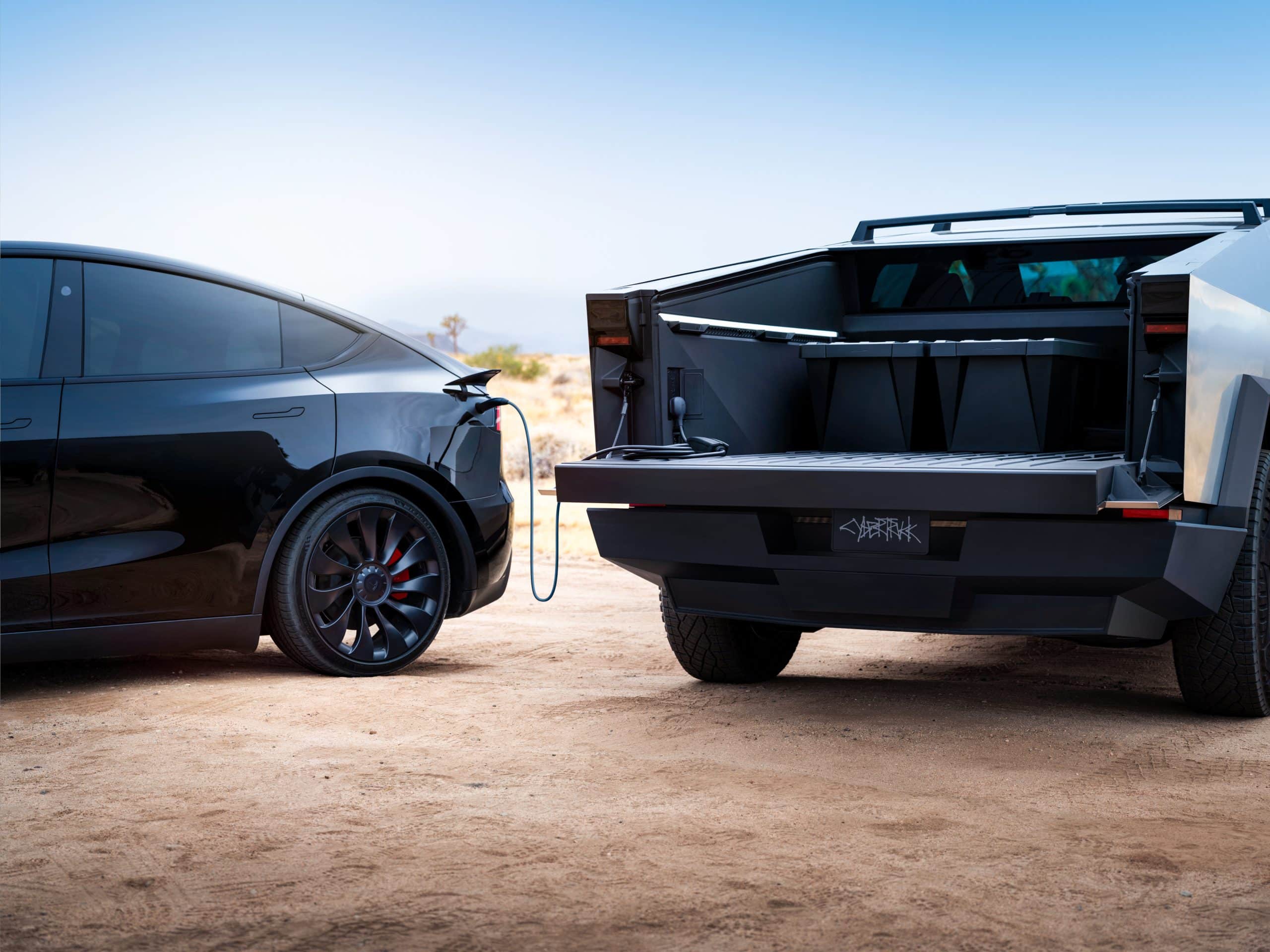
Tesla Shares Status Update on Powershare Feature for Cybertruck
Key Takeaways
- Powershare feature allows Cybertruck to act as a portable power source for homes and other EVs.
- Supports both vehicle-to-load (V2L) and vehicle-to-home (V2H) capabilities for versatile use.
- Release timeline now extended to mid-2026, causing disappointment among early buyers.
- Wes Morrill, Cybertruck’s Lead Engineer, highlighted challenges in integrating Powershare with existing Powerwalls.
- Tesla aims to optimize energy sharing and design additional Powershare features during the extended timeline.
Tesla has long been at the forefront of technological innovation, pushing the boundaries of how vehicles, energy, and infrastructure interact. Its upcoming Cybertruck, already a hot topic in the automotive world, is slated to come loaded with exciting features. Among these is the highly-anticipated Powershare capability. Unfortunately, as is sometimes the case with groundbreaking technology, the rollout is facing significant delays. Let’s delve deep into what the Powershare feature promises, the reasons behind its delay, and what it means for future energy-sharing solutions with Tesla’s products.
What is the Powershare Feature in Cybertruck?
At its core, the Powershare feature transforms the Tesla Cybertruck from just an electric vehicle (EV) into a mobile power station. This bidirectional charging capability is designed to enable the Cybertruck to supply power to homes, appliances, tools, and even other EVs. It’s a critical component of Tesla’s vision for vehicle-to-everything (V2X) energy sharing.
Key Features of Powershare
- Versatile Energy Sharing:
- Powershare supports vehicle-to-load (V2L) and vehicle-to-home (V2H) functions. This means whether you’re powering up a house during an outage or providing juice to an electric grill at a camping site, the Cybertruck’s battery has got you covered.
- Backup Power Source:
- In an era where energy independence is becoming crucial, having a robust backup power source is invaluable. The Cybertruck, with Powershare, essentially serves as a portable generator, enhancing energy security for households.
Why Has the Powershare Release Been Delayed Until Mid-2026?
Despite its enticing prospects, Powershare is yet to be released to the market, pushing its debut to mid-2026.
Challenges in Integration
Wes Morrill, Lead Engineer for the Cybertruck, shed some light on this during a recent communication. The primary challenge lies in seamlessly integrating Powershare with existing Powerwalls. Powerwall, Tesla’s much-praised energy storage solution, must communicate effortlessly with the Cybertruck’s battery. Morrill highlighted the following hurdles:
- Grid-Forming Device Negotiation:
- Two grid-forming entities need to decide which takes the lead in managing energy, without existing network aid and spanning multiple hardware generations.
- Safety and Compliance:
- Ensuring this entire process is safe and meets rigorous certification standards is non-negotiable, as it has implications for grid safety.
How Does the Powershare System Work with Powerwall?
To optimize energy sharing between Cybertruck and Powerwall, Tesla is investing significant time into design and testing. The Powerwall acts as the first line of defense during outages. Once discharged, the Powershare integration taps into the Cybertruck’s considerable battery reserve, ensuring seamless energy continuity.
Timeline and Market Expectations
Originally expected to be available by late 2024, this timeline has disappointed early adopters and Foundation Series Cybertruck buyers who anticipated this feature upon delivery. The extended timeline Tesla has set allows for more thorough development and potential expansion of Powershare functionalities.
Moving Forward: Tesla’s Commitment to Innovation
While the delay might be frustrating for prospective owners, it reveals Tesla’s commitment to releasing a polished and safe product. They plan to use this time to refine Powershare, potentially unlocking additional features and functions that we have yet to imagine.
The Road Ahead
As the world leans more into sustainable energy solutions, Tesla’s Powershare holds the promise of revolutionizing how we perceive vehicle battery utility. Despite current setbacks, the advanced energy sharing capabilities could greatly advance both personal and global energy strategies.
In conclusion, while the delay in Powershare’s rollout is regrettable, it signifies a cautious and comprehensive approach to an innovative feature. It’s a testament to the challenges that come with pioneering new technology and the diligence required to deliver high-quality, reliable products.