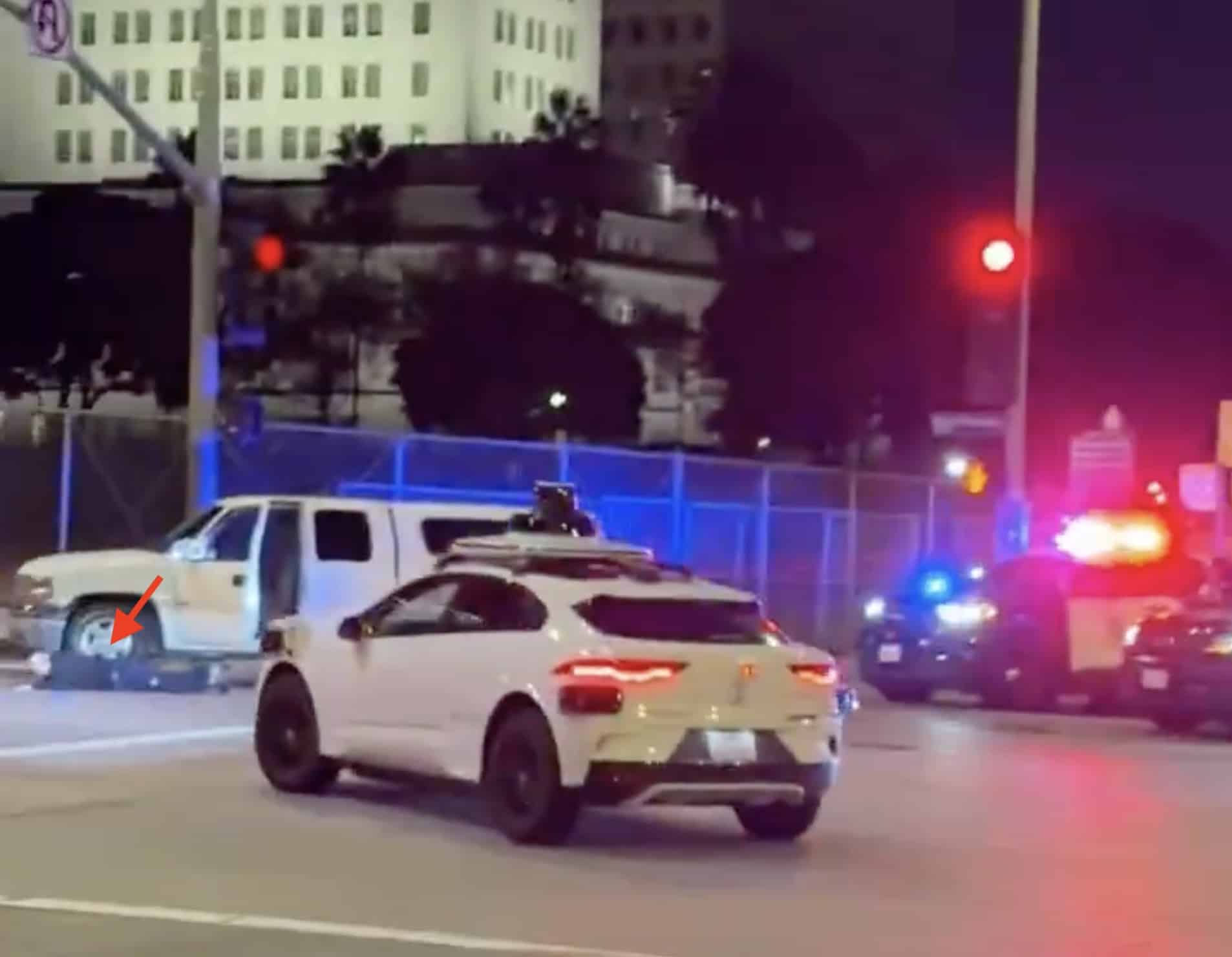
Unraveling the Unexpected: A Waymo Taxi Drives into an LAPD Standoff
Key Takeaways
- A Waymo driverless taxi entered an active LAPD standoff in downtown LA, caught on video.
- The vehicle made an unprotected left turn, seemingly disregarding a red light and entering a police perimeter.
- Officers were in the midst of issuing commands to a suspect when the taxi surprised everyone with its presence.
- Bystanders, including the video filmer, reacted with laughter at the unusual incident.
- No injuries were reported, and Waymo confirmed the passengers were safely delivered to their destination.
- The incident gained attention on social media, with discussions highlighting the difference in public response compared to Tesla’s FSD program.
In a surprising twist that seemed more like a scene from a Hollywood film than reality, a Waymo driverless taxi cruised into the middle of an active LAPD standoff in downtown Los Angeles. This incident, as captured on video, showcased both the potential and challenges of autonomous vehicle technology.
The Incident Breakdown
Onlookers were both amused and bewildered when a Waymo vehicle appeared in the midst of a tense situation. The taxi made an unprotected left turn, appearing to disregard a red light, and entered a police-controlled perimeter. Police officers, focused on directing commands to a suspect, were suddenly confronted with the autonomous vehicle in their midst, a comic relief in an otherwise serious scenario.
Witness Reactions
Bystanders, including the person filming the incident, couldn’t help but chuckle at the unexpected appearance of the driverless car. The video quickly propagated across social media platforms, adding to the already intense debate about the future and safety of autonomous vehicles.
The Public’s Double Standard: Waymo vs. Tesla
The incident not only caught the eyes of those present but also prompted reactions online, highlighting a notable difference in public perception between Waymo and its competitor, Tesla. Had a Tesla vehicle, using its Full Self-Driving (FSD) technology, been the one in this scenario, the public backlash could have been severe.
Why the Disparity in Reactions?
- Media Scrutiny: Tesla’s FSD program frequently finds itself under the media’s magnifying glass, often leading to inflated reactions over minor infractions. In contrast, Waymo, traditionally positioned as more cautious, did not face the same level of critique.
- Consumer Trust: Waymo’s less aggressive marketing of its autonomous capabilities might contribute to higher consumer trust, leading to leniency in the face of errors.
- Company’s Image: Tesla’s polarizing figure, Elon Musk, often draws additional scrutiny and passionate opinions, intensifying reactions to the company’s operations.
No Harm, No Foul?
Fortunately, no injuries were reported in the incident, and Waymo confirmed that all passengers were safely transported to their destination. This outcome was a relief; yet it also opened a crucial discussion on the operational protocols of driverless cars in unpredictable urban environments.
Reflections on Autonomous Safety
This incident serves as a timely reminder of the underlying safety concerns surrounding autonomous vehicles. While the technology promises to enhance convenience and reduce human error, it also comes with unique challenges:
- Algorithmic Decision Making: How do driverless cars interpret complex, real-time scenarios like an active police standoff?
- Infrastructure Limitations: Current urban infrastructures are not fully equipped to handle the intricacies of autonomous navigation.
Moving Forward: Recommendations for Waymo and Autonomous Technology
To pivot effectively from such incidents, companies like Waymo should consider:
- Enhanced System Training: Improving algorithms to better recognize and respond to unusual situations.
- Robust Public Awareness Campaigns: Disseminating information on autonomous technology to mitigate public fear and misconceptions.
- Collaborative Regulatory Frameworks: Working alongside local authorities to establish guidelines for autonomous vehicles during emergencies.
The Waymo incident underscores both the leaps and bounds made by autonomous technology and the road yet to travel. As these technologies integrate further into daily life, maintaining a balance between innovation and safety will be paramount. Autonomous vehicles, when guided by rigorous safety protocols and transparent operations, hold the promise of transforming urban mobility.