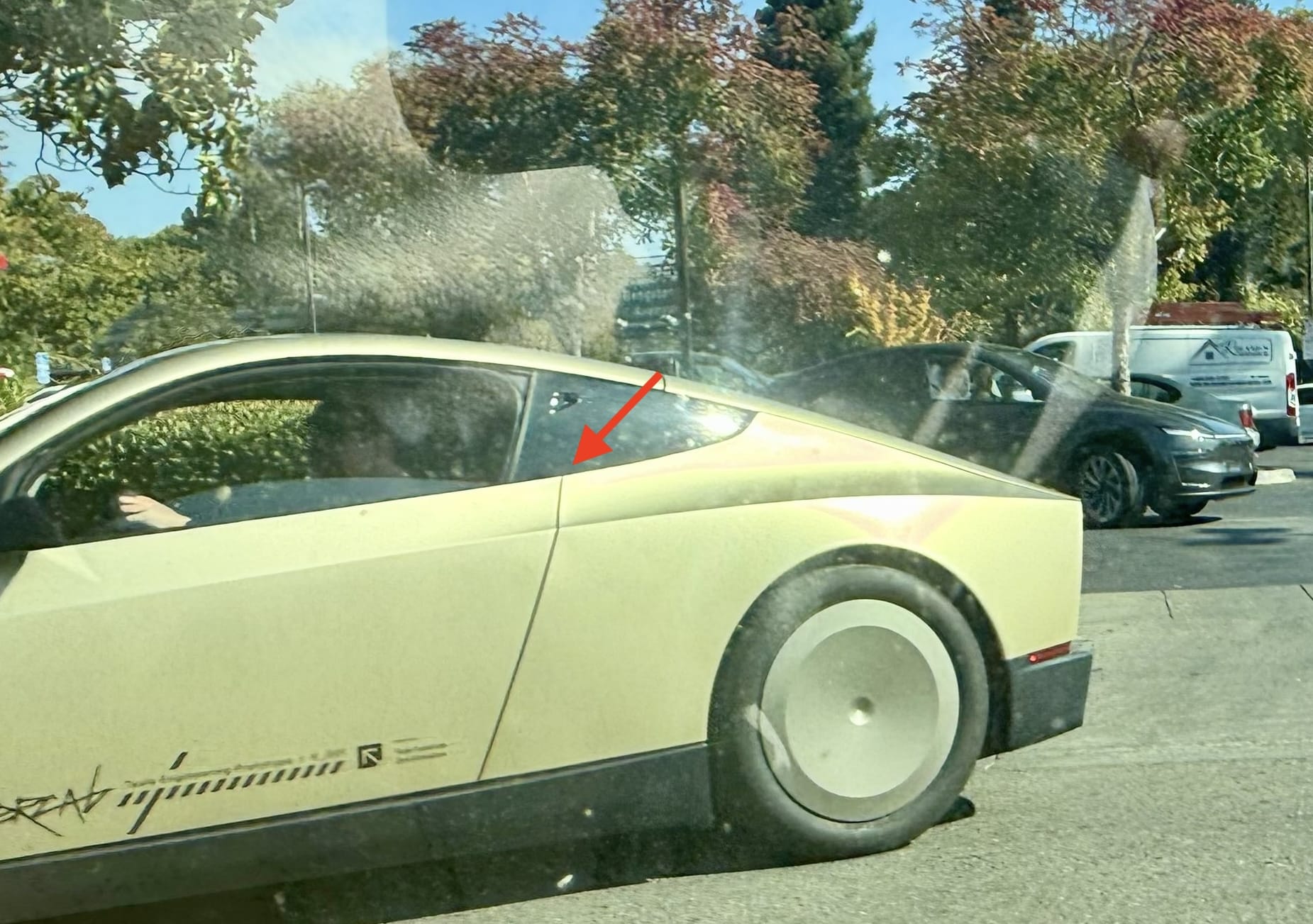
New Tesla Cybercab Sighting Reveals Major Design Update Since 2024 Debut
Key Takeaways
- A recent sighting of the Tesla Cybercab suggests significant updates to its design, particularly for easier access.
- The Cybercab’s door size has been increased to facilitate passenger entry and exit.
- Observations reveal that the camera position in the B-pillar has been slightly adjusted.
- Despite being seen with a steering wheel, the Cybercab will be produced as an autonomous Robotaxi without traditional controls.
- Elon Musk projects an annual production of around 2 million Cybercabs, signaling it as Tesla’s highest-volume vehicle.
The automotive industry is evolving rapidly, and at the forefront of this revolution is Tesla. With the recent sightings of the Tesla Cybercab capturing public attention, it’s evident that the company is making substantial strides in autonomous vehicle innovation. In this blog post, we’ll delve into the latest updates on the Cybercab, explore its design changes, and discuss its anticipated impact on urban transportation.
The Cybercab Reimagined: Design and Functionality
Enhanced Accessibility
One of the most notable updates to the Tesla Cybercab is the modification of the door size. 🚪 This change is not merely cosmetic; it’s a thoughtful enhancement aimed at improving the user experience. With larger doors, passengers can enjoy easier access and egress, an essential feature for public transportation vehicles.
Technological Adjustments
The Cybercab’s design has further been optimized by adjusting the camera position in the B-pillar. 📸 This subtle yet significant change is expected to enhance the vehicle’s autonomous capabilities, providing a broader and more detailed view of its surroundings. This improvement underscores Tesla’s commitment to safety and efficiency in autonomous driving technology.
A Leap Toward Full Autonomy
Steering Wheel and Controls
Interestingly, recent sightings of the Cybercab depicted the vehicle with a steering wheel. However, it’s crucial to note that in its production version, the Cybercab is set to be an entirely autonomous Robotaxi. 🛞 This means no steering wheel or pedals, pushing the boundaries of what we envision in a self-driving car. Tesla’s goal here is to minimize the cost per mile and optimize the vehicle for full autonomy.
Production and Market Impact
Mass Production Plans
Elon Musk has ambitious plans for the Cybercab, projecting an annual production volume of around 2 million units. 📈 This figure not only signals Tesla’s confidence in the vehicle’s demand but also marks the Cybercab as the company’s highest-volume vehicle in its lineup. Such production scalability is expected to have significant implications on urban transport systems globally.
Implications for Urban Transportation
The introduction of the Tesla Cybercab has the potential to revolutionize urban transit. With its design tailored for accessibility and mass production, cities could see a shift toward more sustainable and efficient transportation solutions.
Potential Benefits
- Reduced Traffic Congestion: The efficiency of autonomous fleets could ease urban traffic woes.
- Environmental Impact: With electric vehicles like the Cybercab, cities can cut down on emissions, promoting a healthier environment.
- Cost Efficiency: Optimized for a low cost per mile, the Cybercab offers an economical alternative to traditional transportation services.
Tesla’s Cybercab is not just another vehicle; it’s a harbinger of change in the world of automotive technology and urban transportation systems. With substantial design upgrades and ambitious production goals, the Cybercab exemplifies the potential of autonomous vehicles to reshape our cities. As we anticipate its official production start, the Cybercab reinforces Tesla’s position at the cutting edge of automotive innovation, paving the way for a smarter, more efficient future.