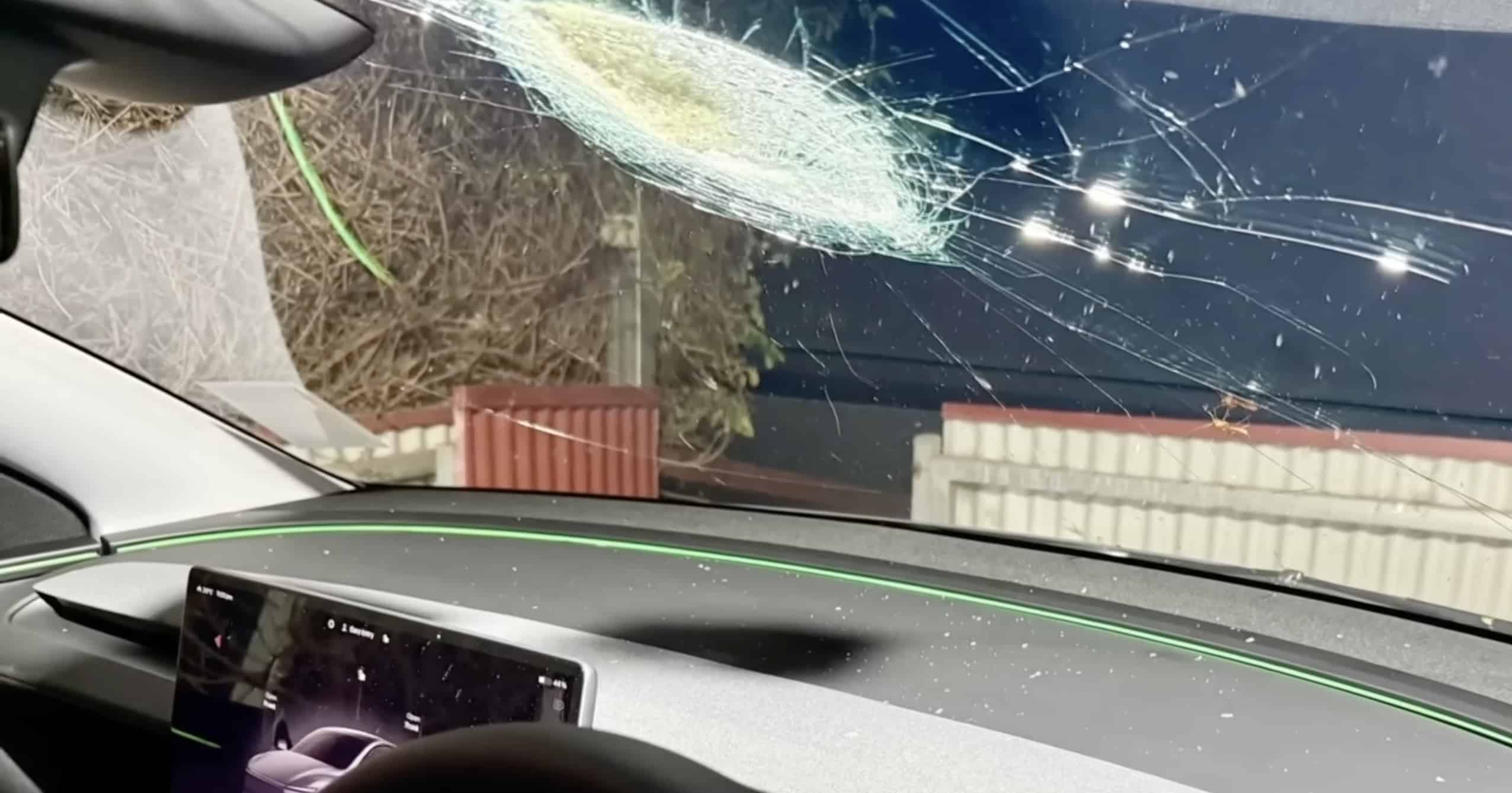
When the Sky Falls: A Meteorite Encounter with Tesla’s Full Self-Driving Technology
Key Takeaways
- A South Australian couple experienced a potential meteorite strike on their Tesla Model Y while using Full Self-Driving (FSD).
- The impact caused glass fragments to scatter inside the vehicle, creating a dangerous situation, but FSD continued to operate without interruption.
- Dr. Andrew Melville-Smith described the explosion-like impact and initial confusion with his wife, thinking they had crashed.
- The South Australian Museum is investigating the incident, with potential evidence of a meteorite based on the heat of the impacting object.
- The windshield was cracked and hot to the touch, indicating significant damage from the impact.
In an astonishing turn of events, a couple driving their Tesla Model Y in South Australia experienced what could be one of the rarest occurrences in automotive history—a potential meteorite strike while relying on Tesla’s Full Self-Driving (FSD) system. This extraordinary incident not only illustrates the capabilities and resilience of Tesla’s autonomous technology but also highlights the unpredictable nature of our universe.
A Celestial Collision on Earth
While driving along the Augusta Highway on a tranquil, pitch-black night, Dr. Andrew Melville-Smith and his wife were suddenly thrust into a whirlwind of chaos. A mysterious object, suspected to be a meteorite, struck the windshield of their newly delivered Tesla, showering the cabin with hot glass fragments. In an almost movie-like moment, the car was filled with white smoke and a smell akin to something burning, leaving the couple in shock and disbelief.
Tesla’s Resilience Against Nature’s Fury
One of the key aspects of this episode was Tesla’s Full Self-Driving system’s ability to maintain control and composure despite the mayhem. As glass splintered and the spouses struggled to comprehend the explosion-like impact, the vehicle continued to drive as if it were unfazed. This demonstrates the strength of FSD’s engineering, designed to ensure safety and reliability even in unforeseen circumstances.
Key Features of Tesla’s FSD in this Incident:
- Immediate Response: The system was able to continue operating smoothly without any human intervention despite the violent event.
- Stability in Crisis: The FSD technology maintained control, allowing the couple to gradually understand and come to terms with the situation.
- Autonomy in Darkness: Operating in pitch-black conditions, the FSD’s performance highlighted the advanced sensory and navigation capabilities that Tesla vehicles possess.
Investigating the Cosmic Intruder
The shocking aftermath, visible as a massive crack and scorching on the windshield, prompted the involvement of the South Australian Museum. With input from experts like geologist Dr. Kieran Meaney, the investigation is closely examining the remnants to confirm whether this object was indeed a meteorite. Factors such as the object’s heat and the pattern of damage lend weight to the hypothesis, though the object itself has yet to be recovered.
Evidential Highlights:
- Heat Damage: The hot-to-the-touch windshield suggests an extremely hot object, typical of meteorites entering the Earth’s atmosphere.
- Physical Crater-like Impact: The substantial crack and molten evidence on the glass present classic signs of a meteorite collision.
Implications and Reflections
This incident opens up a broader dialogue about the implications of meteorites interacting with technological entities like self-driving cars. It presents a need for further research into the possible frequency and impact of such encounters, and what advancements in automotive design might arise to further enhance safety against natural phenomena.
Broader Questions to Consider:
- Probability and Frequency: How common are meteorite interactions with vehicles, and should there be concern about potential future occurrences?
- Technological Preparedness: Are there additional features or enhancements that can be integrated into autonomous systems to better prepare for such unpredictable events?
- Safety Protocols: How can safety measures evolve to ensure optimal protection for passengers in these rare, yet highly impactful scenarios?
In conclusion, as humanity continues to innovate and expand the boundaries of technology, it remains a humbling experience to witness nature reminding us of its unpredictable power. The incident with Dr. Melville-Smith’s Tesla serves as a testament to both the unpredictability of celestial events and the potential of human-engineered safety systems to meet unforeseen challenges.