Tesla’s Revolutionary Step Forward: Exploring the Full Self-Driving (Supervised) V14.1 Update
Key Takeaways
- Tesla has rolled out FSD (Supervised) V14.1, marking its most significant update in nearly a year.
- New features include vision-based navigation and real-time detour handling for blocked roads.
- Enhanced emergency vehicle detection allows cars to yield or pull over for police, fire, and ambulances.
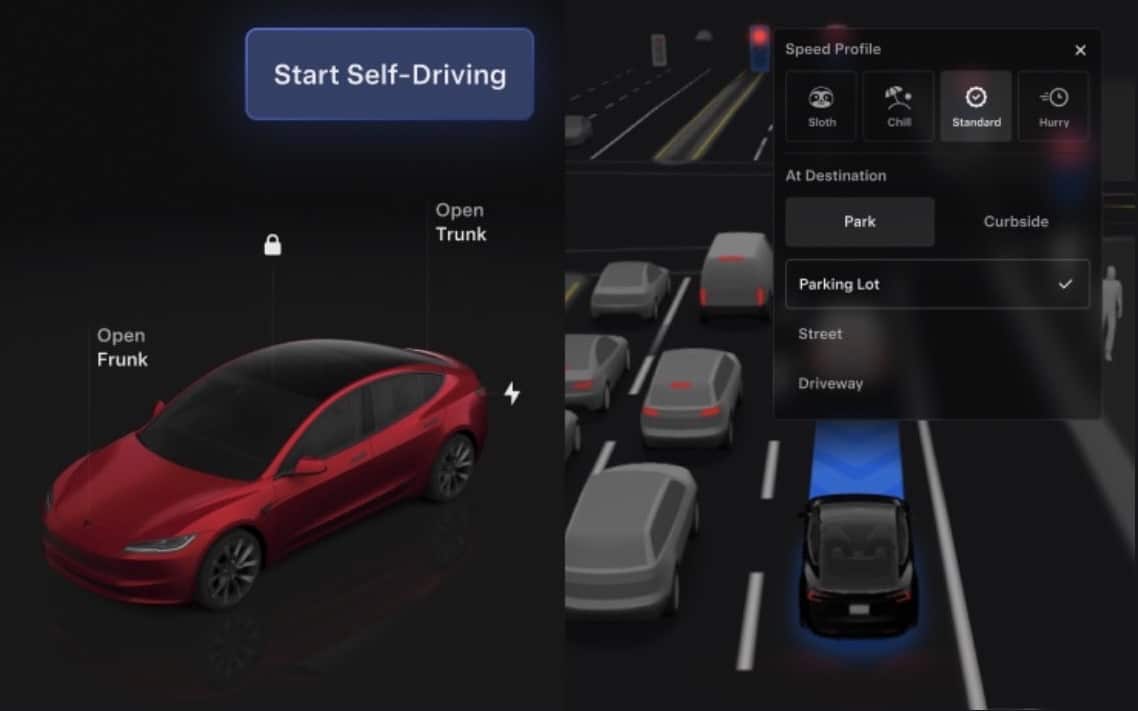
- The update introduces customizable Speed Profiles, including a new “Sloth” mode for conservative driving.
- An automatic camera-cleaning system is now included to maintain clear visibility.
- Improved fault recovery for greater reliability during degraded system operations is promised.
- The Arrival Options feature lets drivers choose parking preferences easily.
- Elon Musk noted the system’s advanced parameters, describing it as feeling “sentient” compared to earlier versions.
In a monumental stride towards autonomous driving, Tesla has launched the Full Self-Driving (Supervised) V14.1 update. This release is not just an incremental upgrade but a significant overhaul that promises enhanced safety, user customization, and a more ‘sentient’ driving experience.
Unveiling FSD V14.1: Stepping Into the Future
The Full Self-Driving (Supervised) V14.1 software by Tesla is designed to redefine the standards of autonomous driving. With nearly a year since the last significant update, V14.1 comes packed with a host of new features and improvements that are set to revolutionize the way we perceive self-driving technology.
Key Features and Enhancements
- Vision-Based Navigation for Real-Time Scenarios: Tesla’s integration of vision-based navigation into its neural network allows for real-time detour handling, even on blocked roads. This innovative feature ensures that the vehicle can adapt to sudden changes in the driving environment seamlessly.
- Advanced Emergency Vehicle Detection: This update enhances the system’s ability to detect and respond to emergency vehicles, such as police cars, fire trucks, and ambulances. Now, Tesla vehicles can pull over or yield automatically, ensuring compliance with traffic laws and enhanced safety.
- Customizable Speed Profiles: Introducing new Speed Profiles, Tesla allows drivers to customize their driving experience more precisely. A notable addition is the “Sloth” mode, which offers a more cautious approach to lane and speed selection, ideal for those who prioritize safety over speed.
- Automatic Camera-Cleaning System: To maintain optimal visibility, Tesla has included an automatic camera-cleaning feature. This ensures the cameras stay free from dirt or debris, crucial for accurate sensor readings which are vital for the vehicle’s autonomous functions.
- Improved Fault Recovery: Tesla promises improved fault recovery, which enhances the system’s reliability during instances of degraded operation. This advancement provides drivers with greater confidence in the vehicle’s capabilities, even under non-ideal conditions.
- Arrival Options Feature: The new Arrival Options feature gives drivers the ability to set preferred parking choices, such as parking lots, driveways, or curbside. This feature aims to simulate a Robotaxi-style drop-off, adding another layer of customization to the driver experience.
The Sentience of Tesla’s V14.1: A Leap Towards Human-Like Driving
As Elon Musk notes, the latest iteration of Tesla’s FSD system boasts a significantly higher parameter count, which contributes to a more ‘sentient’ feel compared to previous versions. This suggests a move towards creating a driving system that closely mimics human decision-making and situational responses, making it a pivotal milestone in autonomous vehicle technology.
What Does This Mean for Tesla Owners?
For Tesla owners and enthusiasts, the V14.1 update represents an exciting leap forward. The inclusion of real-time adaptability, enhanced safety measures, and increased customization options not only boosts the confidence of drivers but also solidifies Tesla’s position as a leader in the autonomous vehicle industry.
Future Prospects and Considerations
With advancements such as these, Tesla continues to pave the way for autonomous vehicles, setting new benchmarks for others to follow. As these technologies mature and additional features are integrated, the journey toward fully autonomous vehicles is not just imaginable but inevitable.