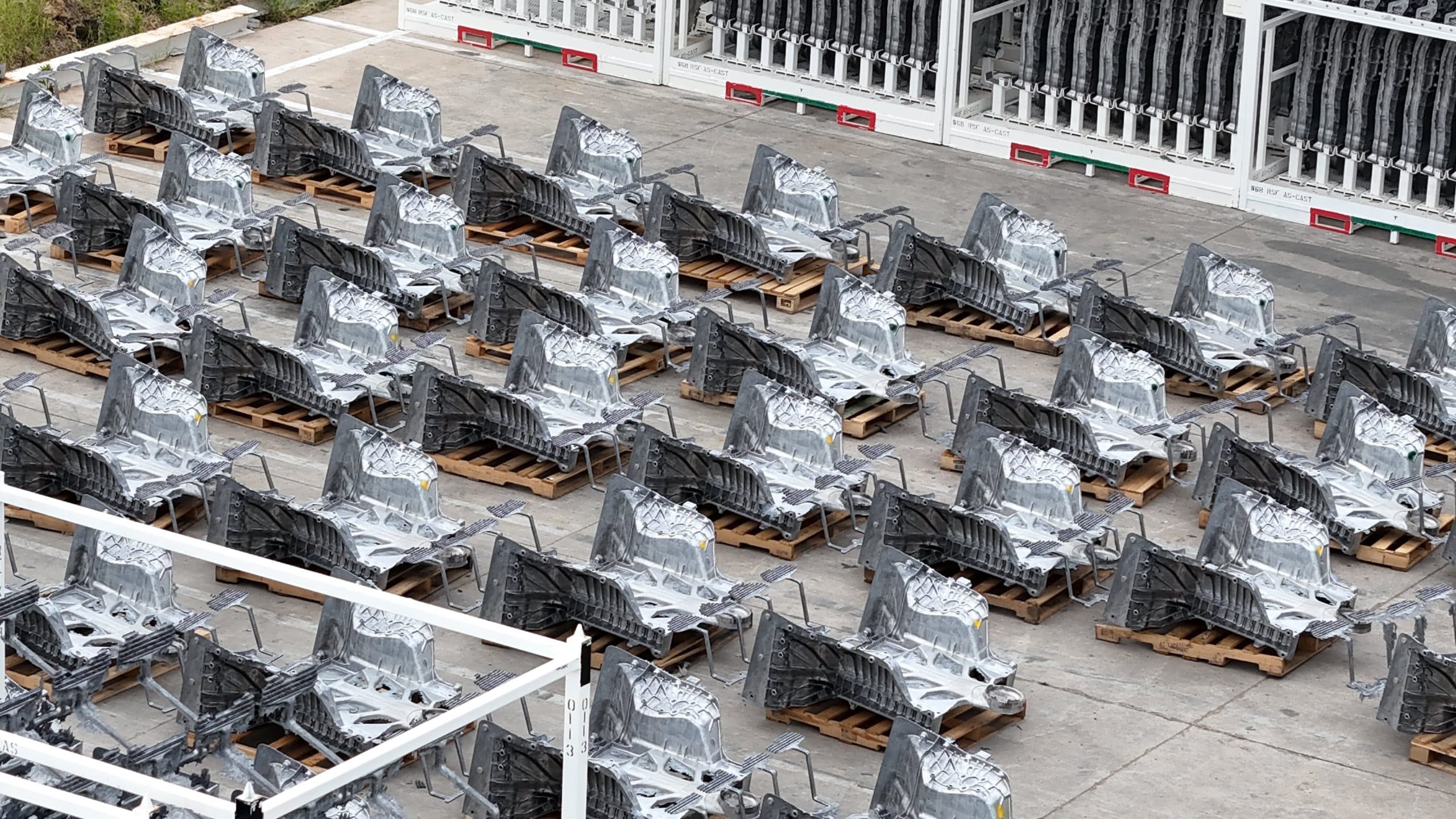
Tesla Gears Up as Cybercab Castings Pile High at Giga Texas
Key Takeaways
- Tesla is piling up components for the Cybercab robotaxi, suggesting preparations for future production.
- Drone footage from Joe Tegtmeyer shows unique castings at Giga Texas, sparking speculation these are for the Cybercab.
- The castings differ from those used in the Model Y and Cybertruck, hinting at new designs and validations for the Cybercab.
- Elon Musk at Tesla’s Q1 2025 All-Hands meeting detailed that the Cybercab production line will resemble high-speed electronics manufacturing.
- Musk claimed the Cybercab line could output a vehicle every five seconds, aiming for an annual production of 2 million units.
Tesla, a name synonymous with innovation, is once again setting the stage for a monumental shift in the automotive industry. With the upcoming launch of the Cybercab, Tesla aims to redefine not just vehicles but the very nature of vehicle production. Here’s a dive into what makes the Cybercab project a potential game-changer and what it means for the future of Tesla and the automotive industry at large.
Paving the Way for the Cybercab
The journey of Tesla’s Cybercab started with the sighting of mysterious castings at Giga Texas, identified via drone footage captured by Joe Tegtmeyer. These castings, unlike those seen for the Model Y and Cybertruck, suggest preparations for a vehicle that breaks away from convention. This development has fueled speculation that they are intended for the much-anticipated Cybercab.
Unpacking the Cybercab’s Production Process
During the Q1 2025 Tesla All-Hands meeting, CEO Elon Musk provided insights into the ambitious project. Musk revealed that the Cybercab’s production process would mimic high-speed consumer electronics manufacturing, distinguishing it from traditional automotive lines. This radical approach is expected to achieve unprecedented production speeds.
Key Features of the Cybercab Production:
- Innovative Manufacturing Design:
- The Cybercab line is designed to function at speeds akin to electronics assembly, a stark contrast to the slower, traditional car manufacturing processes.
- High-Volume Capability:
- With projections to produce a vehicle every five seconds, the Cybercab line aims for an annual output of about 2 million units, showcasing Tesla’s commitment to scaling production effectively.
- Advanced Automation:
- The production line is so advanced that it minimizes human intervention, ensuring precision and speed in every stage of manufacturing.
Visionary Goals for the Cybercab
Elon Musk’s vision for the Cybercab revolves around more than just the vehicle itself; it’s about creating a scalable and efficient manufacturing ecosystem that supports future innovations. By redefining how cars are built, Musk aims to set a precedent for the industry to follow.
Why the Cybercab Could Be a Game-Changer
- Environmental Impact:
- By making robotaxi services more widespread, Tesla could significantly reduce the number of private cars on the road, promoting greener, more sustainable urban transport solutions.
- Economic Implications:
- If successful, the Cybercab could lower transportation costs drastically, making high-quality mobility affordable and accessible.
- Technological Advancement:
- The fusion of automotive and high-speed electronic manufacturing technology could lead to advancements that spill over into other sectors, pushing the automotive industry into new realms of capability.
The Road Ahead for Tesla
The vision behind Tesla’s Cybercab is emblematic of the company’s ethos: challenge the norm, innovate fearlessly, and push the boundaries of what’s possible. As production gears up, the automotive world watches closely. Will Tesla’s Cybercab—and the innovative processes behind it—herald a new era in automotive manufacturing?
As Tesla progresses towards this ambitious goal, it serves as a beacon for industries looking towards sustainable innovation and strategic foresight. The anticipation surrounding the Cybercab will undoubtedly keep the spotlight on Tesla, as it continues to navigate uncharted territories in technology and transportation.