Tesla’s Swedish Power Play: Supercharging Through Union Opposition
Key Takeaways
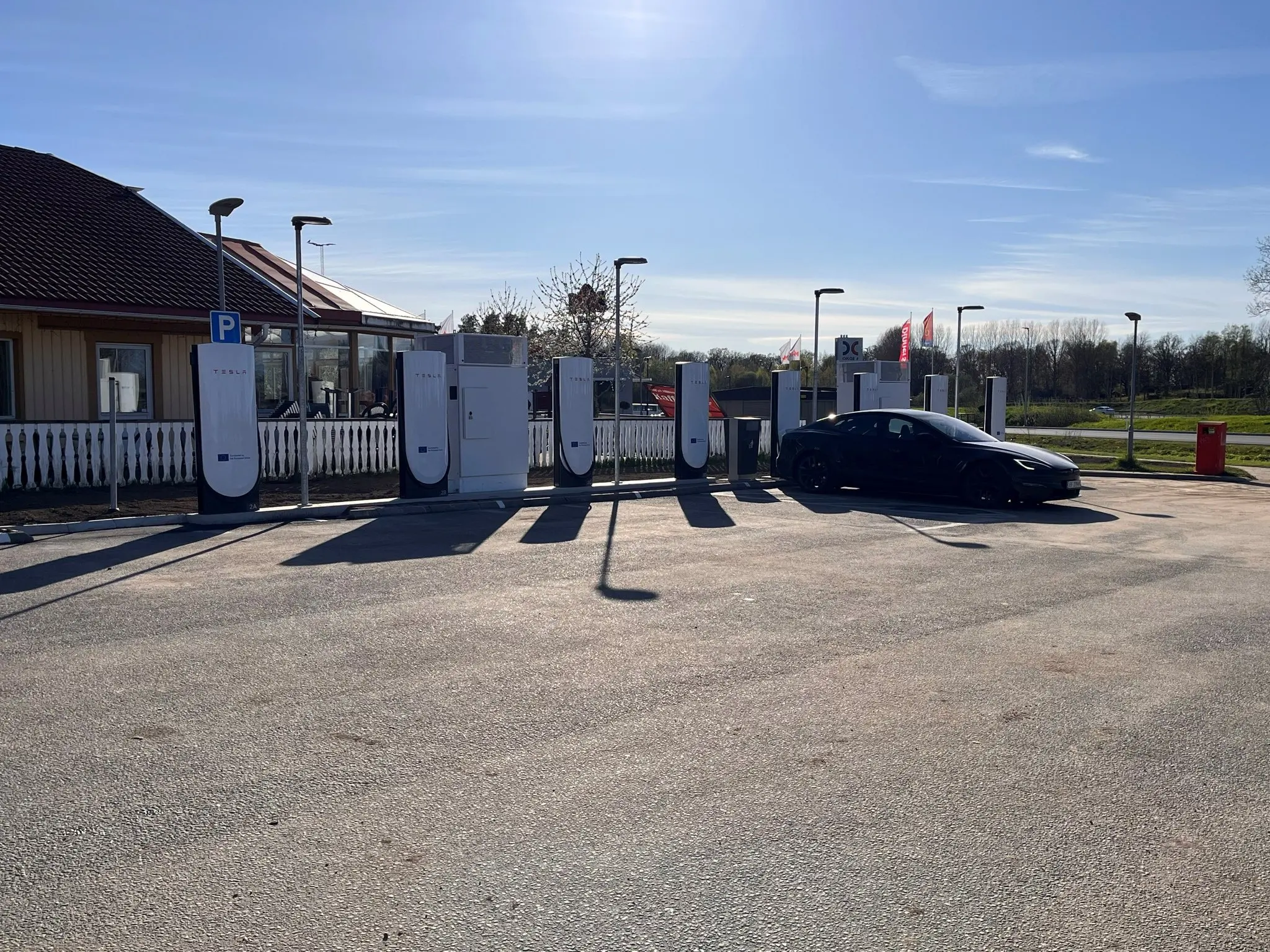
- Tesla Sweden continues to expand its Supercharger network, opening a new station in Ödeshög despite union opposition.
- The new Supercharger serves all EV brands, reinforcing Tesla’s commitment to supporting diverse electric vehicle drivers in Sweden.
- The Ödeshög Supercharger features 12 V4 stalls, capable of providing up to 250 kW, strategically located near the E4 highway.
- Tesla has circumvented union strikes against new Superchargers by employing alternative installation methods, including bringing in foreign companies and staff.
- Dialogue highlights: @NicklasNilsso14 notes the Supercharger’s significance and Tesla’s ability to install despite union efforts, while Bello from the Elektrikerna union questions Tesla’s methods but acknowledges their persistence.
As the global leader in electric vehicles, Tesla is always in the spotlight, and its activities in Sweden are no exception. The company is making headlines by expanding its Supercharger network, opening new stations such as the recent site in Ödeshög. This move has not been without drama, as unions have voiced strong opposition. Here, we delve into Tesla’s strategic advancements, the technology behind its Superchargers, and the broader implications for the electric vehicle (EV) market in Sweden.
Tesla’s Persistent Expansion Amidst Union Challenges
Despite facing union resistance, Tesla Sweden has successfully opened a new Supercharger station in Ödeshög. This expansion is part of Tesla’s broader strategy to enhance its EV infrastructure across the country to support not just its vehicles but also other EV brands. This inclusive approach underlines Tesla’s commitment to fostering a comprehensive and versatile charging network in Sweden.
Union Opposition: A Barrier or a Catalyst?
The Tesla-Union saga in Sweden highlights a classic clash between corporate ambition and labor rights. Various unions, including the Elektrikerna and Seko, have deployed sympathy strikes to hinder Tesla’s expansion plans. However, Tesla’s response has been robust, demonstrating its willingness to fly in foreign teams to circumvent local union actions, as pointed out by a representative from the Elektrikerna union.
This standoff raises critical questions: How far can companies go to bypass union power? While unions play a crucial role in protecting worker rights, companies like Tesla argue that such strikes stifle innovation and infrastructure development. Tesla’s persistence illustrates how businesses can utilize creative solutions to maintain momentum, even in the face of strong opposition.
Understanding the Technology: V4 Tesla Superchargers
Tesla’s latest V4 Superchargers, such as the ones deployed in Ödeshög, boast impressive capabilities. With 12 stalls capable of delivering up to 250 kW each, these chargers are designed to minimize downtime for EV drivers. They are part of Tesla’s initiative to provide faster and more efficient charging solutions, which is vital as EV adoption accelerates.
The strategic placement of the Ödeshög Supercharger near the E4 highway enhances its accessibility for travelers, providing not just Tesla owners but all EV drivers with a convenient recharging option.
The Broader Implications for Sweden’s EV Market
Tesla’s expansion effort is indicative of broader trends in the Swedish EV market. As more drivers transition to electric vehicles, the demand for rapid and reliable charging infrastructure will continue to grow. Tesla’s strategy highlights a competitive advantage by not only enhancing its network but also by positioning itself as a leader in supporting a wide array of EV brands.
- Diversification of EV Infrastructure
By opening its Supercharger stations to all EVs, Tesla is promoting a more inclusive electric driving ecosystem. This approach encourages cross-brand collaboration, potentially leading to standardized charging norms in the future. - Innovation vs. Regulation
Tesla’s ongoing conflict with Swedish unions underscores a critical tension between innovation and regulation. While regulations and union actions are essential for maintaining workforce equity, they must also be adaptable to enable technological advancement and infrastructure growth. - The Future of EV Charging
Tesla’s developments set a benchmark for what EV infrastructure could look like worldwide. As other nations look towards Sweden as a model, Tesla’s strategies could inform future policy and infrastructure development, ensuring EV benefits are maximized while addressing labor concerns.
A Path Forward
Tesla’s expansion in Sweden amidst union opposition is a testament to the company’s resilience and innovation. As the dialogue between corporations and unions continues to evolve, stakeholders must consider constructive collaboration methods to align economic progress with social equity. As Tesla and other automakers expand their footprints, they redefine what it means to effectively navigate opposition while delivering technological advancements.